
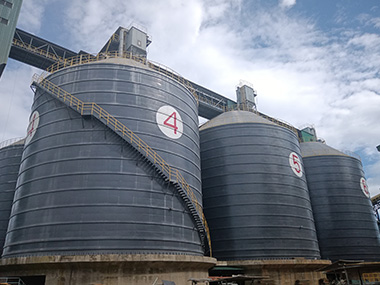

Silo Structure Technologies for Power Plant
Material Properties Manxing Engineering Team 2026-11-11
# Silo Structure Technologies for Power Plant > **Category**: Engineering Guide > **Target keyword**: silo structure technologies > **Author**: Manxing Engineering Team > **Last updated**: 2026-11-09 --- ## Introduction In the mining sector, silo structure technologies has become a critical engineering discipline that directly determines operational reliability, regulatory compliance, and total cost of ownership. As slag processing and storage operations scale up, the technical demands placed on silo structure technologies have grown increasingly complex. This guide draws on Manxing's more than 20 years of engineering experience across 6 industrial sectors to provide a comprehensive, field-tested reference for engineers, plant managers, and procurement professionals. ## Design Considerations Effective silo structure technologies design requires systematic attention to multiple engineering dimensions: ### Material Properties Understanding the physical and chemical properties of slag is the foundation of sound design. Key parameters include bulk density, angle of repose, wall friction, cohesion, permeability, and moisture content. These properties directly influence structural loading, flow pattern, and equipment selection. ### Structural Requirements Structural design must account for vertical pressure, lateral pressure, wind load, seismic load, and thermal effects. Design should follow ASCE 7 and applicable local codes. Finite element analysis is recommended for large-diameter or non-standard configurations. ### Process Integration The system must integrate seamlessly with upstream and downstream processes, including feeding, conveying, metering, and discharge. Interfaces should be designed to minimize spillage, dust generation, and material degradation. ## Selection Guidelines When selecting silo structure technologies for your project, evaluate the following criteria: 1. **Capacity and throughput** — Match design capacity to your production plan with appropriate margin. 2. **Material compatibility** — Ensure all wetted parts are compatible with slag properties. 3. **Energy efficiency** — Evaluate power consumption and operating costs over the full life cycle. 4. **Maintenance access** — Design for safe and convenient inspection and maintenance. 5. **Compliance** — Verify adherence to ASCE 7 and local regulations. 6. **Expandability** — Consider future capacity expansion needs. ## Installation and Commissioning Proper installation is critical to long-term performance: 1. **Foundation preparation** — Ensure foundation meets design loads and levelness tolerances. 2. **Erection sequence** — Follow approved lifting and assembly procedures. 3. **Welding quality** — Implement qualified welding procedures and inspection protocols. 4. **Sealing and corrosion protection** — Apply specified coatings and sealants. 5. **Commissioning** — Conduct systematic testing before handover. ## Operation and Maintenance To maximize service life and reliability, implement a preventive maintenance program covering: - **Regular inspection** — Visual and instrumental inspection of structural and mechanical components. - **Lubrication** — Follow manufacturer's lubrication schedule. - **Monitoring** — Track key parameters (temperature, pressure, vibration) for early fault detection. - **Spare parts** — Maintain inventory of critical spare parts. ## Troubleshooting Common issues with silo structure technologies and recommended responses: | Problem | Possible Cause | Recommended Action | |---|---|---| | Reduced flow | Material buildup or arching | Inspect and clean; check aeration system | | Structural concern | Corrosion or overload | Conduct structural assessment | | Excessive dust | Sealing degradation | Inspect and replace seals | | Measurement drift | Sensor issue | Calibrate or replace sensor | ## Economic Analysis Understanding the total cost of ownership is essential for project evaluation: | Cost Component | Typical Share | Notes | |---|---|---| | Equipment and materials | 40-50% | Depends on specifications and materials | | Installation and commissioning | 15-20% | Site conditions affect cost | | Civil works and foundation | 15-20% | Geotechnical conditions affect cost | | Operation and maintenance | 10-15% | Energy and labor costs | | Spare parts and repairs | 5-10% | Depends on maintenance strategy | Return on investment is typically achieved within 2-5 years through improved efficiency, reduced losses, and extended service life. ## Case Study A mining facility recently implemented silo structure technologies as part of a comprehensive upgrade project. The project involved: 1. **Requirement analysis** — Detailed assessment of material properties and process conditions. 2. **Engineering design** — Customized design using ASCE 7 and advanced simulation tools. 3. **Manufacturing** — Quality-controlled fabrication with full inspection protocols. 4. **Installation** — Professional on-site execution with safety management. 5. **Commissioning** — Systematic testing and operator training. The project achieved all performance targets and has been operating reliably since commissioning. ## Future Trends The field of silo structure technologies continues to evolve with several important trends: - **Digitalization** — IoT sensors, cloud monitoring, and AI-powered analytics are transforming asset management. - **Automation** — Automated control systems reduce labor requirements and improve consistency. - **Sustainability** — Energy-efficient designs and low-emission technologies are increasingly important. - **Modular construction** — Prefabricated modules reduce on-site construction time. - **Predictive maintenance** — Data-driven maintenance strategies minimize unplanned downtime. ## Frequently Asked Questions **Q: What is the typical design life for silo structure technologies?** A: With proper design, installation, and maintenance, a service life of 20-30 years is typical for steel structures. **Q: What standards apply?** A: Design should comply with ASCE 7 and applicable local codes and regulations. **Q: How do I get a project-specific solution?** A: Contact Manxing's engineering team with your material properties, capacity requirements, and site conditions. ## Conclusion Silo Structure Technologies is a critical engineering discipline in the mining industry. By applying sound engineering principles, following applicable standards, and working with an experienced partner, you can achieve safe, efficient, and reliable operations. Manxing has delivered over 5,000 projects across 60+ countries. Contact our engineering team for a project-specific consultation. --- ## About the Author **Manxing Engineering Team** — Zhengzhou Manxing Mechanical Equipment Co., Ltd. specializes in the design, manufacture, and installation of bulk material storage and handling systems. With over 20 years of experience, our team provides turnkey solutions from concept to commissioning. ## Reference Images ![Silo Structure Technologies](/www/image-hub/2. 工业筒仓图片分类/焊接仓/粉料(水泥、粉煤灰等)/10000t以上/102.jpg) ![Silo Structure Technologies](/www/image-hub/2. 工业筒仓图片分类/焊接仓/粉料(水泥、粉煤灰等)/10000t以上/87.jpg) ![Silo Structure Technologies](/www/image-hub/2. 工业筒仓图片分类/焊接仓/粉料(水泥、粉煤灰等)/1000-10000吨/11.jpg) ![Silo Structure Technologies](/www/image-hub/2. 工业筒仓图片分类/物料图片/粉料/水泥.jpg) ![Silo Structure Technologies](/www/image-hub/2. 工业筒仓图片分类/焊接仓/粉料(水泥、粉煤灰等)/1000-10000吨/114.jpg)

Written and reviewed by the Manxing silo engineering team · Last updated Nov 12, 2026

Prepared by our in-house bulk-handling engineers and checked against the design practice listed below. Questions about a specific project can be sent to our engineering desk through the contact page.

Standards and industry references

  • EN 1991-4 — Eurocode 1: Actions on structures, Part 4: Silos and tanks
  • ACI 313 — Design and construction of concrete silos and stacking tubes
  • GB 50077 — Code for design of reinforced concrete silos
  • ISO / ASABE bulk-solids handling guidance on material flow and segregation
Нужна инженерная поддержка?
Поговорите с нашими инженерами о ваших конкретных требованиях
Поговорите с инженером
Тел: +86 159 3903 7000
[email protected]
+86 159 3903 7000