```html
Aggregate Storage: Segregation Prevention in Coarse Material Silos
Aggregate Storage: Segregation Prevention in Coarse Material Silos
Segregation in aggregate silos occurs when particles of different sizes separate during filling or discharge, compromising product uniformity and structural performance. This article explains how to prevent segregation through proper silo geometry, controlled filling protocols, and engineered discharge systems. By implementing mass-flow designs, regulating drop heights below 3 meters, and maintaining consistent material bed depths, operators can reduce segregation rates by up to 90% and ensure batch-to-batch consistency for concrete and asphalt production.
Understanding Segregation in Coarse Aggregate Silos
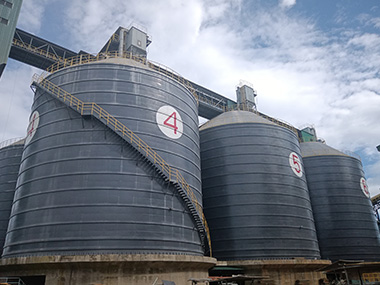
Figure 1Figure 2Figure 3
What Causes Segregation During Aggregate Handling
Segregation is driven by differences in particle size, density, and shape. When coarse aggregate—typically ranging from 4.75 mm to 37.5 mm—is discharged from a conveyor into a silo, several mechanisms activate simultaneously. Trajectory segregation occurs as larger particles roll farther from the drop point due to higher momentum, while finer particles remain near the center. Air entrainment causes lighter fines to disperse and settle in peripheral zones. In a standard 500-tonne capacity silo receiving 200 tonnes per hour, a single uncontrolled fill cycle can create radial size variations exceeding 15% across the silo cross-section. The angle of repose differences between 10–20 mm and 20–40 mm fractions further amplify layering, especially when the silo wall angle exceeds 60° from horizontal.
Types of Segregation: Fine Migration vs. Coarse Particle Roll
Two primary segregation patterns dominate coarse aggregate storage. Fine migration happens when particles smaller than 2.36 mm percolate through gaps between larger particles during vibration or impact, accumulating in lower layers or central cores. This phenomenon reduces the effective coarse fraction in upper discharge zones by 8–12%. Coarse particle roll occurs during both filling and discharge: larger stones migrate toward silo walls while fines concentrate at the center. In funnel-flow silos, this creates a preferential discharge path where the central fine-rich material exits first, leaving coarse-ring deposits along walls. For structural concrete requiring consistent gradation per ASTM C33, either pattern can push the fineness modulus outside the 2.3–3.1 acceptable range, triggering rejection of entire batches.
Silo Design Strategies to Minimize Segregation
Hopper Geometry and Outlet Configuration
The hopper section is the most critical zone for segregation control. A mass-flow hopper with a wall inclination of 70–75° from horizontal and a minimum outlet dimension of 250 mm prevents arching and ensures uniform velocity across the discharge plane. For coarse aggregates with a bulk density of 1,550–1,650 kg/m³, the outlet width should exceed six times the maximum particle size—meaning a 25 mm aggregate requires at least a 150 mm outlet. Multi-outlet configurations with 2–4 discharge points arranged symmetrically reduce the effective storage radius, limiting the distance coarse particles can roll. Each outlet should be equipped with a variable-speed belt feeder rated for 150% of nominal throughput to maintain a minimum material bed depth of 1.2 meters, which acts as a natural cushion against impact segregation.
Internal Flow Channel Design: Mass Flow vs. Funnel Flow
Silo flow pattern selection directly determines segregation severity. Funnel-flow silos (mass-flow ratio below 0.75) create a central discharge channel where material moves in a first-in-last-out sequence, causing extreme size separation along the channel walls. Mass-flow silos (mass-flow ratio above 0.95) ensure all material moves downward simultaneously, eliminating stagnant zones. The transition is achieved by installing a properly designed internal cone or stepped hopper that redistributes lateral pressure. For a 3-meter-diameter silo storing 15–25 mm limestone, converting from funnel flow to mass flow reduces the segregation index (defined as the coefficient of variation of particle size across discharge samples) from 18% to below 4%. Internal liners made of UHMW-PE with a friction coefficient below 0.20 further promote wall slip and uniform flow.
Material Handling Best Practices
Controlled Filling Techniques
Filling methodology determines the initial segregation profile before any discharge occurs. Telescopic chute systems that maintain a drop height under 3 meters reduce particle velocity at impact, limiting trajectory segregation by 60–70%. For silos exceeding 15 meters in height, a rotating spreader with adjustable deflector plates distributes material in thin, concentric layers of 150–200 mm thickness. This layering approach—called chevron stacking—creates a built-in blending effect during discharge. When receiving multiple aggregate fractions, sequential filling with 30-second intervals between grades prevents intermixing at the drop point. Dust suppression systems operating at 0.3–0.5 bar pressure also reduce air entrainment, keeping fines within the bulk stream rather than allowing peripheral deposition.
Discharge Rate Management
Discharge velocity directly influences segregation during extraction. A controlled discharge rate of 50–100 tonnes per hour for a 500-tonne silo maintains a steady material front. Rapid discharge exceeding 200 tonnes per hour creates a steep funnel within the silo, pulling fines from the center while coarse particles remain at the walls. Variable-frequency drives on belt feeders allow operators to adjust speed based on real-time gradation analysis. Installing a belt scale with ±0.5% accuracy and a moisture probe ensures that discharge parameters adapt to material conditions. For blended aggregates, maintaining a minimum residual bed of 800 mm above the outlet prevents direct hopper-wall contact that would otherwise channel coarse particles preferentially.
💡 Engineering Tip: Install a grain-level radar sensor at the silo roof and a bed-load pressure cell at the hopper transition. When the material bed drops below 1.2 meters, the control system automatically reduces discharge speed by 40% and activates the recirculation conveyor. This dual-sensor approach prevents empty-silo discharge—the single most damaging segregation event—where falling aggregate from 10+ meters creates irreversible particle separation.
Monitoring and Maintenance Protocols
Real-Time Level and Flow Monitoring
Modern aggregate silos integrate multi-point monitoring to detect segregation before it impacts product quality. 3D level scanners with ±2 mm accuracy map the material surface profile every 30 seconds, identifying mounding or rat-holing that indicates flow irregularities. At the discharge point, an inline particle-size analyzer using laser diffraction or AI-based image analysis provides real-time gradation data with a 15-second update cycle. When the fineness modulus deviates by more than 0.15 from the target, the system triggers an alarm and diverts the off-spec material to a reblending hopper. For facilities producing 500+ cubic meters of concrete daily, this monitoring reduces aggregate-related batch rejections by 85%.
Preventive Maintenance Schedules
Mechanical wear in silo systems progressively degrades segregation control. Hopper liner inspection every 2,000 operating hours detects wear beyond 3 mm thickness loss, which increases wall friction and promotes funnel flow. Feeder belt alignment checks every 500 hours prevent uneven discharge that creates asymmetric flow channels. Annual flow pattern verification using tracer-particle testing—introducing 5 kg of colored 20 mm particles and mapping their discharge sequence—confirms that mass-flow conditions are maintained. Silo wall thickness measurement via ultrasonic testing at 12-month intervals identifies corrosion-induced roughness changes that alter flow behavior. A documented maintenance log with these intervals ensures consistent performance across a 20+ year silo service life.
Case Study: 2,000-Tonne Limestone Silo Retrofit
A commercial aggregate producer in central China operated two 2,000-tonne capacity limestone silos (15–25 mm fraction) experiencing chronic segregation complaints from downstream concrete plants. Initial testing showed a fineness modulus variation of 2.4–3.2 across discharge batches—well outside the 2.6 ± 0.2 specification. The existing funnel-flow silos had 55° hopper walls and single 200 mm outlets. The retrofit included: (1) installation of internal mass-flow cones with 72° wall angles and UHMW-PE liners, (2) replacement of the single outlet with a dual-outlet configuration at 300 mm each, (3) addition of a telescopic filling chute limiting drop height to 2.5 meters, and (4) integration of a real-time particle analyzer at the discharge conveyor. Post-commissioning data over 90 days showed the fineness modulus range narrowed to 2.55–2.72, with a segregation index dropping from 16.8% to 3.1%. The concrete plant reported zero batch rejections attributable to aggregate gradation in the following six months, and the producer achieved a 14% reduction in cement consumption due to improved packing density from consistent gradation.
Frequently Asked Questions
What is the maximum allowable drop height to prevent aggregate segregation?
For coarse aggregates above 10 mm, the drop height should not exceed 3 meters. For particles between 4.75 mm and 10 mm, limit drops to 2 meters. Beyond these thresholds, trajectory segregation increases exponentially—a 5-meter drop can produce a 20% size variation across the pile radius. Telescopic chutes, spiral trickle tubes, and rotating spreaders




.jpg)