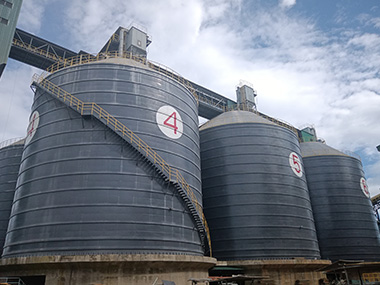
Coal spontaneous combustion occurs when low-temperature oxidation raises the coal's internal temperature beyond its ignition threshold, typically between 60°C and 90°C depending on coal rank. The primary causes are prolonged exposure to air, poor stockpile geometry, and inadequate temperature monitoring. This article explains the engineering principles and proven prevention strategies that eliminate self-ignition risks in industrial coal storage silos.
Coal reacts with atmospheric oxygen even at ambient temperature, producing exothermic reactions that release 10–100 kJ per mole of oxygen consumed. When heat dissipation is slower than heat generation, thermal runaway begins. The process follows three stages: latent oxidation (30–70°C), accelerated oxidation (70–120°C), and open combustion above the ignition point. Bituminous coals with volatile matter between 25–35% are most susceptible.
1.2 Critical Temperature Thresholds
Research identifies the crossing point temperature (CPT) as the critical indicator. For most thermal coals, CPT ranges between 140–160°C. However, dangerous self-heating initiates much earlier. A 2°C per day temperature rise inside a silo indicates active oxidation requiring immediate intervention. The R70 index (self-heating rate at 70°C in adiabatic conditions) quantifies coal propensity: values above 0.8°C/hr classify coal as highly reactive.
1.3 Coal Rank and Susceptibility Factors
Lignite and sub-bituminous coals pose the highest risk due to higher moisture content (15–40%) and greater porosity (30–50%). Particle size distribution matters significantly. Fines below 6mm increase surface area exponentially—a 10% increase in fines content can raise oxidation rates by 25–40%. Pyrite content above 2% accelerates oxidation catalytically, while moisture levels between 6–12% create optimal conditions for both oxidation and heat retention.
2. Silo Design Engineering for Combustion Prevention
2.1 Sealed vs. Ventilated Silo Configurations
Flat-bottom silos designed for coal storage prioritize controlled atmosphere management. Fully sealed steel silos with nitrogen blanketing reduce oxygen concentration below 8%, effectively halting oxidation. For large-capacity silos (5,000–50,000-ton), partial sealing with controlled ventilation achieves an optimal balance: maintaining O₂ below 12% while managing moisture. Concrete dome silos offer natural thermal mass advantages, keeping internal temperatures 5–8°C lower than ambient peak conditions.
2.2 Material Selection and Internal Coatings
Silo construction materials directly influence combustion risk. Galvanized steel panels (275 g/m² zinc coating) resist corrosion from coal's acidic leachate (pH 2.5–4.5). Internal epoxy coatings with 300–500 μm thickness prevent coal adhesion that creates stagnant zones. Hopper angles must exceed 65° for bituminous coal and 70° for lignite to ensure mass flow and eliminate dead storage. Wall roughness below Ra 12.5 μm prevents coal hang-up and spontaneous heating pockets.
2.3 Dead Storage Zone Elimination
Dead zones—areas where coal remains stationary for over 72 hours—are the primary ignition source. Mass flow silo design ensures first-in-first-out discharge, with all coal in motion. Activator vibrators and air injection systems (0.2–0.5 MPa compressed air through ceramic nozzles) prevent bridging and rat-holing. Silo discharge rates should exceed 500 tons/hour for units above 10,000-ton capacity to maintain turnover cycles under 14 days.
3. Active Prevention and Monitoring Systems
3.1 Temperature Monitoring Networks
Distributed fiber optic temperature sensing (DTS) provides continuous profiling along silo walls and within the coal mass, detecting temperature changes of 0.1°C at 1-meter resolution. Thermocouple arrays at 3-meter vertical intervals offer point monitoring with ±0.5°C accuracy. Alarm thresholds are set at 50°C (warning), 60°C (action), and 70°C (emergency). Data sampling every 15 minutes with automated trend analysis enables detection of heating trends 3–5 days before critical conditions develop.
3.2 Inert Gas Injection Systems
Nitrogen generation systems (PSA or membrane type) delivering 95–99.5% N₂ at flow rates of 50–500 Nm³/hr maintain inert atmospheres within sealed silos. CO₂ injection from external sources provides rapid suppression, with 15–20% CO₂ concentration reducing oxidation rates by over 90%. Automated injection triggered at 55°C alarm levels delivers 200 Nm³/hr per 1,000-ton silo compartment, achieving safe oxygen levels within 4–6 hours.
3.3 CO Detection and Early Warning
Carbon monoxide is the earliest reliable indicator of coal self-heating, appearing 24–72 hours before temperature rises become detectable. Electrochemical CO sensors (0–500 ppm range, ±2 ppm accuracy) installed at silo headspace and extraction ducts provide continuous monitoring. CO levels above 50 ppm trigger inspection protocols; above 100 ppm activate suppression systems. Multi-point sampling with 20–30 second response times ensures no blind spots in large silo volumes.
Engineering Tip: The most cost-effective prevention strategy combines silo design for mass flow with DTS monitoring and automated nitrogen injection. This three-layer approach reduces spontaneous combustion incidents by over 98% compared to passive storage methods. Investment in proper silo engineering typically pays back within 18–24 months through prevented coal losses and avoided downtime.
4. Operational Best Practices
4.1 Inventory Rotation Protocols
Maximum residence time limits are critical: 15 days for lignite, 30 days for high-volatile bituminous, and 45 days for low-volatile grades. Implementing strict FIFO (First-In-First-Out) through automated discharge sequencing prevents coal aging. Daily inventory reconciliation with weight sensors (±0.5% accuracy) identifies stagnant zones. When residence limits are approached, accelerated draw-down to 20% capacity followed by refill breaks oxidation chains.
4.2 Pile Geometry Management
For open or semi-enclosed storage, pile angles must remain below the coal's angle of repose minus 5° to minimize air infiltration. Layered compaction at 300–500 mm lifts with 25-ton vibratory rollers reduces void ratio from 0.45 to 0.28, cutting oxygen diffusion rates by 60%. Pile heights above 15 meters create dangerous internal pressure differentials—maximum recommended height is 12 meters for reactive coals. Perimeter air curtains (0.8–1.2 m/s velocity) create positive pressure barriers against ambient air ingress.
4.3 Emergency Response Procedures
When temperatures exceed 70°C, emergency protocols activate immediately. Silo compartment isolation via guillotine gates (operating time under 30 seconds) contains affected zones. Controlled discharge at maximum rate into dedicated emergency bunkers prevents silo structure damage. Water deluge systems (10 L/m²/min) provide surface cooling but require caution—steam generation in confined spaces can cause pressure events. Post-incident silo inspection including wall thickness measurement and structural assessment is mandatory before return to service.
5. Case Study: 20,000-Ton Thermal Coal Silo Project
A Southeast Asian power plant experienced three spontaneous combustion incidents annually in its existing concrete bunkers, each causing 2–4 weeks of downtime and coal losses exceeding 5,000 tons per event. Manxing engineered a replacement solution featuring twin 10,000-ton flat-bottom steel silos with 30-meter diameter and 28-meter height.
The design incorporated mass-flow hoppers at 70° angles, internal food-grade epoxy coating, and a 128-point thermocouple array connected to DTS fiber. A PSA nitrogen system (300 Nm³/hr capacity) with automated injection at 55°C was integrated. CO monitoring with 8 sampling points per silo provided early detection capability.
Results after 24 months of operation: zero combustion incidents, coal residence time reduced to average 18 days, temperature excursions above 45°C eliminated, and annual maintenance costs reduced by 60% compared to the previous bunker system. The client reported ROI achievement within 16 months through prevented losses alone.
6. Frequently Asked Questions
Q1: What is the maximum safe storage duration for coal in silos?
Safe duration depends on coal rank and silo engineering. For well-designed sealed silos with nitrogen blanketing, bituminous coal can be stored 60–90 days safely. Without active atmosphere control, limits drop to 15–30 days for reactive coals. DTS monitoring with automated suppression systems can extend safe periods by 40–60% by enabling early intervention before critical temperatures develop.
Q2: How does silo diameter affect spontaneous combustion risk?
Larger diameters increase the thermal mass-to-surface ratio, reducing natural heat dissipation. Silos above 25-meter diameter require enhanced monitoring density (thermocouples every 2 meters vertically) and active cooling provisions. The critical diameter threshold is approximately 30 meters for bituminous coal—beyond this, passive ventilation becomes insufficient and sealed designs with atmosphere control are mandatory.
Q3: Can spontaneous combustion occur in fully sealed steel silos?
Yes, if residual oxygen remains above 8% or if air ingress occurs through poorly sealed connections. However, properly sealed silos maintaining O₂ below 5% with continuous nitrogen supplementation effectively prevent combustion. The key is achieving and maintaining seal integrity—annual pressure decay testing (500 Pa to 250 Pa in minimum 30 minutes) verifies seal performance.
Engineer Your Coal Storage for Zero Combustion Risk
Manxing delivers turnkey EPC coal storage silo solutions with integrated spontaneous combustion prevention systems. From thermal modeling and silo design to monitoring system commissioning, our engineering teams ensure safe, efficient coal storage tailored to your coal properties and capacity requirements.