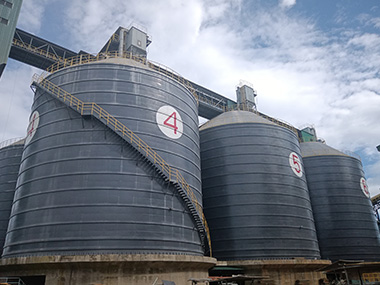
Clinker Storage: High Temperature Material Handling Best Practices
Clinker storage requires silos capable of withstanding material temperatures up to 200°C while preventing moisture reabsorption and quality degradation. Proper clinker storage demands temperature-resistant steel structures, controlled aeration systems, and moisture barriers that maintain clinker's chemical integrity from kiln discharge to grinding. This guide covers engineering specifications, operational protocols, and proven design strategies for safe, efficient clinker storage at industrial scale.
Understanding Clinker's Thermal and Physical Properties
Figure 1Figure 2Figure 3
Temperature Profile from Kiln to Storage
Clinker exits the rotary kiln at approximately 1,200–1,400°C and passes through cooler stages, arriving at storage facilities at 80–200°C depending on cooler efficiency. Elevated temperatures create thermal expansion challenges for silo walls, requiring expansion joints and heat-resistant coatings. Material at above 150°C can degrade standard epoxy linings, necessitating ceramic or metallic wear plates in high-contact zones. Continuous temperature monitoring at discharge points prevents thermal shock to structural components and identifies cooler system inefficiencies before they cause downstream equipment damage.
Particle Size and Flow Characteristics
Clinker particles range from 3–25 mm in diameter with bulk density of 1.2–1.5 t/m³. Its angular, abrasive nature demands reinforced wall surfaces and controlled discharge velocities. Moisture content below 0.5% is critical—even minor moisture ingress causes partial rehydration of free calcium oxide, reducing cement quality and causing silo blockages. Clinker's flow pattern depends on silo geometry; mass-flow designs prevent rat-holding and segregation, while funnel-flow configurations suit smaller, single-outlet installations with lower throughput requirements.
Silo Structural Design for High-Temperature Operations
Material Selection and Thermal Protection
Carbon steel (Q235B/Q345B) remains standard for clinker silos up to 150°C operating temperature. Above this threshold, external insulation layers of rock wool (100–150 mm thickness) reduce wall surface temperatures and prevent condensation on inner surfaces. Internal wear liners using NM400 abrasion-resistant steel or ceramic castable refractories extend service life in high-wear zones such as impact points below inlet chutes and hopper sections. Bolted construction allows thermal movement, while welded designs require expansion rings at 8–12 meter vertical intervals to accommodate differential expansion between hot internal material and cooler external walls.
Foundation and Load Considerations
Clinker silos impose significant vertical and horizontal loads. A 10,000-ton silo generates approximately 120,000 kN of vertical load on the foundation, requiring reinforced concrete ring or raft foundations with bearing capacity exceeding 200 kPa. Thermal cycling causes repeated expansion-contraction cycles, so foundation design must accommodate movement at the wall-to-base junction. Ring beams distribute loads evenly and prevent differential settlement that could distort the silo shell and compromise seal integrity. Seismic considerations in high-risk zones demand additional reinforcement and flexible connection details at the base.
Aeration and Discharge Systems
Aeration Design for Clinker
Clinker aeration requires low-pressure, high-volume airflow to prevent bridging and ensure reliable extraction. Aeration pads or fluidizing panels installed at 300–500 mm spacing in hopper sections deliver 0.5–1.5 m³/min per m² of aeration surface. Airflow must be dry and oil-free—moisture in aeration air causes clinker hydration and hardening. Rotary screw compressors with aftercoolers and dryers maintain dew point below -20°C. Pulse-jet aeration sequences activate zones sequentially during discharge, reducing energy consumption by 40–60% compared to continuous aeration while maintaining consistent material flow.
Discharge Equipment Selection
Heavy-duty rotary feeders, apron feeders, and belt conveyors handle clinker discharge. Rotary feeders rated for 200°C material temperature use heat-resistant seals and oversized bearings with external lubrication points. Apron feeders suit large capacities (500–3,000 t/h) and tolerate oversized particles up to 100 mm. Flow control gates with hydraulic actuation enable precise throughput regulation. All discharge equipment must include emergency shutoff capability and blockage detection sensors that trigger automatic shutdown when abnormal conditions are detected.
Moisture Prevention and Quality Preservation
Sealing and Weather Protection
Silo roof and wall joints require continuous sealing to prevent rainwater ingress. Double-sealed expansion joints, silicone-sealed bolt connections, and sloped roof designs (minimum 5° pitch) eliminate standing water. Positive-pressure dust filtration systems maintain slight internal overpressure, preventing ambient humid air from entering through leak points. Roof-mounted aeration fans with filtered intake provide continuous air exchange, keeping internal relative humidity below 30%. All access hatches and manways use gasketed covers with compression locks rated for the operating temperature range.
Quality Monitoring Systems
Temperature sensors at multiple vertical levels detect hot spots indicating moisture ingress or exothermic reactions. Free lime (f-CaO) sampling ports at discharge points enable quality verification before clinker enters the grinding circuit. Level radar sensors with high-temperature probes (up to 250°C) provide continuous inventory tracking. Automated sampling systems extract representative samples for laboratory analysis, ensuring clinker meets specifications for downstream cement production. Data logging systems record temperature trends and trigger alarms when parameters exceed set thresholds.
Pro Tip: Install thermal imaging cameras at the silo inlet zone to detect temperature anomalies exceeding 200°C. Early detection prevents refractory damage and identifies cooler system malfunctions before they impact storage infrastructure. Combine with automated alarm systems that notify operators within 30 seconds of threshold breach.
Case Study: 15,000-Ton Clinker Silo Project
A Southeast Asian cement producer required a new clinker storage facility handling 1,200 t/h from a 5,000 tpd kiln. The design specified a 60-meter-tall, 20-meter-diameter steel silo with 15,000-ton capacity, rated for 180°C material temperature. The project included a 120-meter belt conveyor feeding system, fluidized hopper aeration with 48 aeration pads, and a multi-stage dust collection system. Construction was completed in 16 weeks using prefabricated shell sections and bolted assembly. The facility achieved 99.2% mechanical availability in its first year, with zero moisture-related quality incidents and clinker temperature maintained below 120°C at discharge point through optimized cooler integration.
Frequently Asked Questions
What is the maximum safe clinker storage temperature?
Clinker can be stored safely up to 200°C with appropriate structural design. Above 200°C, accelerated wear on internal components and increased thermal stress on the silo shell occur. Most facilities target 80–150°C at storage inlet by optimizing cooler performance, balancing thermal efficiency with equipment longevity.
How long can clinker be stored without quality degradation?
Under dry, sealed conditions, clinker maintains chemical properties for 3–6 months. Free lime (f-CaO) increases marginally over time, but remains within acceptable limits if moisture exposure is prevented. Regular sampling every 30 days during extended storage ensures quality compliance before grinding.
What maintenance is required for clinker silos?
Quarterly inspections of wall thickness using ultrasonic testing detect erosion in high-wear zones. Annual replacement of aeration pad membranes and seal inspections prevent moisture ingress. Rotary feeder bearings require lubrication every 500 operating hours. Thermal sensor calibration every six months ensures accurate monitoring and early warning capability.
Need a clinker storage solution engineered for your specific thermal and capacity requirements? Manxing provides complete EPC silo contracting—from thermal analysis and structural design through fabrication, installation, and commissioning. Our team has delivered over 200 clinker storage projects across 40+ countries, with capacities ranging from 2,000 to 80,000 tons. Contact our engineering team today for a free site assessment and customized design proposal tailored to your clinker temperature profile, throughput requirements, and local climate conditions.