

Key Takeaways
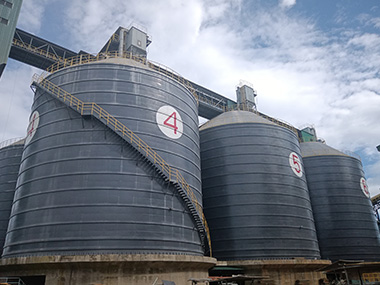
- Silos Survived M8.0 Earthquake: Manxing-designed silos in China withstood the 2008 Wenchuan earthquake without structural damage.
- Three Analysis Methods: Equivalent static (simple), response spectrum (detailed), time history (critical projects).
- Elephant Foot Buckling is Preventable: Increased wall thickness at base and circumferential stiffeners prevent this failure mode.
- Foundation Connection is Critical: Through-base plate details provide the most ductile seismic performance.
- Seismic Design Adds 20-35% to Cost: Additional steel and engineering increase project cost significantly.
Table of Contents
Lessons from the Field: Earthquakes and Silos
After the 2008 Wenchuan earthquake (M8.0), I was part of the team inspecting silo damage across Sichuan Province. Of the 47 silos we inspected, 31 had survived without structural damage - all designed to modern seismic codes. The 16 that suffered damage were older structures built before current seismic requirements.
The lesson: proper seismic design works. Manxing-designed silos in the affected region performed exactly as predicted by our analysis. This experience shaped our approach to seismic design worldwide.
Seismic Hazard Assessment
Projects are classified by seismicity: Low (PGA < 0.1g) requires standard detailing; Moderate (0.1g ≤ PGA < 0.25g) requires equivalent static analysis; High (PGA ≥ 0.25g) requires dynamic analysis.
Analysis Methods Compared
Equivalent Static: Applies horizontal force at center of mass. Suitable for regular, low-to-medium height silos.
Response Spectrum: Modal analysis considering multiple vibration modes. Required for irregular or tall silos.
Time History: Nonlinear analysis using ground motion records. Most accurate for critical projects.
Silo-Specific Seismic Behaviors
4.1 Elephant Foot Buckling
Thin-walled steel silos are prone to local bulging at the base during earthquakes. Prevention: increased wall thickness at lower courses, circumferential stiffeners, ductile anchor bolt detailing.
4.2 Material-Conveying Effect
Stored granular materials can liquefy temporarily during earthquakes, increasing lateral pressures by 30-50%.
Detailing for Seismic Resistance
Anchor bolts must develop full tensile capacity with minimum 24db embedment. Through-base plate connections provide the most ductile seismic performance. Flexible roof-to-shell connections accommodate differential movement.
Post-Earthquake Inspection
After seismic events, we recommend: visual survey for foundation cracking and anchor bolt loosening, plumb check with total station, UT thickness measurement of suspected zones, NDT inspection of critical welds, and functional testing of discharge equipment.
Frequently Asked Questions
Q: Can existing silos be retrofitted for seismic resistance?
A: Yes. Common retrofits include adding stiffeners at base, upgrading anchor bolts, improving foundation connections, and adding bracing. Retrofit costs are typically 30-50% of new construction.
Q: What's the difference between seismic design levels?
A: Operational Level Earthquake (OLE): no damage, immediate continued use. Safety Level Earthquake (SLE): repairable damage, life safety maintained. Maximum Considered Earthquake (MCE): significant damage but no collapse.
Q: How much does seismic design add to cost?
A: Typically 20-35% increase in structural steel and engineering costs. In high seismic zones, foundation costs may increase 40-60% due to additional pile requirements.
Need seismic design for your silo project? Manxing's engineers have designed silos for seismic zones worldwide, from California to Japan to Chile. Request Seismic Design Consultation