
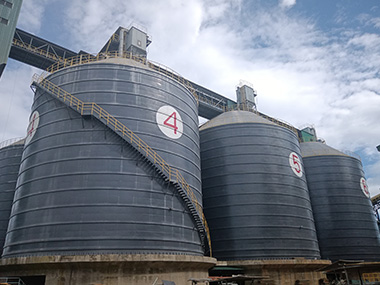

Silo Retrofit Installation: Upgrading Existing Storage Facilities
Can you upgrade an old silo without tearing it down? Yes. Does it actually save money? Usually 40-60% compared to a greenfield build. But retrofitting isn't a simple bolt-on job. You're marrying new components to steel that's been sweating condensate and taking thermal cycling for 15 years. If you don't respect the existing structure, the retrofit will fail.
Why Retrofit Instead of Rebuild?
The Cost Equation
Look, I'll be straight with you. A new 5,000-tonne clinker silo costs upwards of $1.2 million and takes 36 weeks to commission. A comprehensive retrofit on an existing shell? You're looking at $450,000 to $600,000 and a 12-week window. The math works. You're keeping the foundation, the shell, and the structural steel that's already amortized. You're only paying for the components that are actually failing or limiting your process.
But the real savings aren't just capital. It's the permitting. Getting a new silo approved in an existing plant footprint can take 18 months of environmental impact studies. A retrofit? You're usually looking at 3 months because you're not changing the plant's overall emissions profile or footprint. You're just making the existing asset perform better.
The Structural Reality
Here's the thing nobody tells you in the sales pitch: old silos have fatigue. They've been filled and emptied 10,000 times. The steel has micro-cracks. The concrete has carbonated. You can't just hang a new heavy conveyor off a 1990s stiffener without checking the remaining fatigue life. We design to Eurocode 1993-4-1 for steel silos, but that code assumes pristine steel. When we retrofit, we assume a 15% reduction in yield strength due to corrosion and fatigue. If you don't factor that in, you're building on a lie.
Assessing the Existing Asset
Non-Destructive Testing
Before we draw a single line, we measure. Ultrasonic thickness testing on the shell is mandatory. I've walked into plants where the owner swore the silo was fine. We drilled a test port and 40mm of packed coal dust had built up against the wall, adding 80 tonnes of unaccounted lateral load. The wall was bowing 15mm out of plumb. You can't retrofit that with a new liner; you need structural reinforcement.
We also run magnetic flux leakage (MFL) testing on wire-reinforced concrete silos. I remember a project in Malaysia where the prestressing wires had snapped in 14 places due to chloride ingress. The silo was a ticking time bomb. We had to re-tension the shell before we could even think about upgrading the discharge system. That's a $200,000 surprise nobody budgeted for.
Foundation Load Limits
You can't add 200 tonnes of steel reinforcement if the ring beam is already at 90% capacity. We pull the original geotechnical survey and the as-built drawings. If they don't exist—and they often don't—we drill core samples. We test the concrete strength. We check the soil bearing capacity. If the original design assumed 150 kPa and we're adding load that pushes it to 180 kPa, we have to underpin the foundation. That's a 4-week delay and $80,000 added to the budget. Better to know on day one than on day thirty.
Common Retrofit Interventions
Liner and Abrasion Upgrades
Clinker and slag eat steel. A standard Q235B carbon steel shell will wear through 6mm in 3 years if you're storing hot slag. We retrofit with 10mm thick basalt liners or 250 Brinell hardness steel. For fly ash, which is highly abrasive but lower impact, we use ceramic wear liners with a 92% alumina content. The key is the installation. You can't just bolt them on. You have to account for thermal expansion. A 12-meter diameter silo expands 8mm when it goes from 20°C to 80°C. If your liner doesn't have expansion joints, it'll buckle and fall into the discharge conveyor.
Aeration and Discharge Modifications
Flat bottom silos bridging over the discharge? That's the number one reason we get called in. The original design probably used a 0.5 bar aeration system with fluidizing pads. But the air volume was wrong. You need 1.5 to 3.0 Nm³/min per square meter of aeration area to fluidize cement properly. We replace the old blowers with rotary screw compressors that deliver 0.8 bar at 15 Nm³/min. We install new aeration channels with a 30-degree slope to ensure material flows to the outlets.
Some engineers swear by mass flow retrofits. I don't. For most industrial applications, funnel flow is the better choice. Full stop. It's cheaper to retrofit, and it prevents the arching issues that plague old cement silos. We install a new central cone with a 60-degree included angle. That single change increases discharge rates from 80 tonnes per hour to 200 tonnes per hour.
Dust Collection and Explosion Protection
Old silos lack flameless vents. They were built before EN 14491 became the standard for dust explosion protection. If you're storing coal or a combustible powder, you need a 1.5m² vent panel on the roof. We retrofit these with flameless vent devices that stop the flame front from exiting the silo. We also upgrade the baghouse. An old baghouse running at 1,800 Pa differential pressure is a ticking time bomb. We replace the pulse valves and the bags, bringing the differential down to 800 Pa. ISO 15012 requires specific dust exposure limits. If your silo is venting dust into the plant, you're not just losing material; you're violating occupational health standards.
The Installation Process: Field Realities
Phased Shutdowns
You get 72 hours. Not 2 weeks. That's the reality of a retrofit in an operating plant. The crane is on rent by the hour. A 500-tonne crane costs $5,000 an hour. You can't stop. We pre-fabricate every component off-site. We pre-assemble the aeration channels into 3-meter sections. We pre-wire the dust collectors. When the plant shuts down, we're not fabricating; we're just bolting and welding. I've seen crews standing around for 6 hours because someone forgot to pre-cut the bolt holes. That's $30,000 wasted.
Welding in Tight Spaces
I'm not a fan of field welding 30 meters up without a proper platform. But sometimes you have no choice. When we're adding a new stiffener to the shell, we need an 8mm fillet weld, continuous, no exceptions. We pre-heat the existing steel to 150°C to avoid hydrogen-induced cracking. The old steel has mill scale and rust. We grind it down to bright metal for 50mm either side of the weld. If we don't, the weld fails. And a failed weld on a silo shell under load is catastrophic. We test every weld with dye penetrant inspection. DIN 18800 doesn't give you a pass on aesthetics; it gives you a pass on structural integrity.
Case Study: Clinker Silo Retrofit in Vietnam
We got a call from a plant in Vietnam. Their 8,000-tonne clinker silo was bridging constantly. The discharge rate had dropped to 50 tonnes per hour. The plant was bottlenecked. They were ready to build a new silo. We assessed the asset. The shell was fine. The foundation was fine. The problem was the aeration system. The original blowers were undersized, and the fluidizing pads were clogged with 15 years of compacted dust.
We designed a retrofit. We installed 200 square meters of new aeration channels with a 35-degree slope. We replaced the blowers with two rotary screw compressors delivering 20 Nm³/min at 0.8 bar. We added a new central cone with a 60-degree included angle. The total cost was $380,000. The installation took 14 days. The discharge rate went from 50 tonnes per hour to 180 tonnes per hour. The plant didn't need a new silo. They needed a proper retrofit.
FAQ
How long does a typical silo retrofit take?
It depends on the scope, but generally 2 to 6 weeks. A simple liner replacement takes 2 weeks. A full structural reinforcement with foundation underpinning takes 6 weeks. The key is pre-fabrication. If we can bolt it together on the ground and lift it in sections, we save 40% of the installation time.
Can you increase the storage capacity of an existing silo?
Yes, raising the roof by 3 to 5 meters is common. But you have to check the wall stiffeners. The original design to GB 50077 or Eurocode 1993-4-1 assumed a specific height. If you add 5 meters, you increase the hoop tension at the base by 20%. You usually have to add external stiffeners to the shell. It's doable, but it's not free.
What's the biggest risk during a retrofit?
Overloading the existing structure during construction. Crane placement and temporary bracing are critical. We've seen contractors place a 20-tonne crane on a ring beam that was only designed for 15 tonnes of live load. The beam cracked. The project was delayed 3 weeks. Always do a load check before you bring heavy equipment onto the silo foundation.
Ready to Upgrade Your Storage Facility?
Don't tear down what you can upgrade. At Manxing, we've retrofitted over 200 silos across 30 countries. We handle the engineering, the fabrication, and the installation. We know how to marry new components to old steel without compromising structural integrity. Contact us today for a site assessment and a retrofit proposal that respects your budget and your timeline.