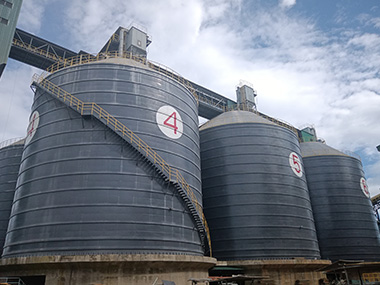
Silo Lifting and Jacking Equipment Selection Guide
Selecting the right silo lifting and jacking equipment depends on silo diameter, total weight, and site access constraints—hydraulic jacking systems handle most large-diameter silos above 15 meters, while crane lifting suits smaller units under 200 tons. This guide covers equipment types, capacity calculations, safety factors, and selection criteria to help project engineers specify the correct lifting system for safe, efficient silo installation.
Understanding Silo Lifting and Jacking Fundamentals
Figure 1Figure 2Figure 3
What Is Silo Jacking?
Silo jacking is a bottom-up assembly method where the silo shell is built at ground level and raised incrementally using synchronized hydraulic jacks. Each lift cycle typically raises the structure 1.2–2.0 meters, matching the height of one shell ring course. This method eliminates the need for tall scaffolding and keeps all welding and inspection work at ground level, improving quality control and worker safety. Jacking is the preferred method for silos with diameters exceeding 15 meters or heights above 25 meters, where crane lifting becomes impractical due to boom reach and capacity limitations.
When to Use Jacking vs. Crane Lifting
Crane lifting works best for smaller silos with total assembled weight under 200 tons and diameters below 12 meters. A single crane lift requires the complete silo to be assembled on the ground, then hoisted and set onto the foundation in one operation. Jacking becomes necessary when crane capacity is insufficient, site access limits crane positioning, or the silo height exceeds 40 meters. For bolted silos, jacking allows sequential ring installation during the lift process. The decision between methods should be based on a formal lift plan comparing equipment availability, total weight, site geometry, and schedule requirements.
Types of Silo Lifting and Jacking Equipment
Hydraulic Jacking Systems
Hydraulic jacking systems use multiple synchronized hydraulic cylinders mounted on jacks positioned around the silo circumference. Standard jacks are available in capacities of 10, 20, 30, 50, and 80 tons per unit. A typical 25-meter-diameter cement silo weighing 350 tons requires 8–12 jacks, each rated at 50 tons, providing a combined capacity of 400–600 tons against a working load of approximately 44 tons per jack (including a 1.25 safety factor). Modern systems feature PLC-based synchronization that maintains lift height uniformity within ±2 mm across all jacks, preventing structural distortion during the lift cycle.
Mechanical Chain Hoist Systems
Chain hoist lifting uses electric or manual chain hoists mounted on temporary support towers around the silo perimeter. Each hoist typically has a capacity of 5–20 tons and lifts the silo by engaging welded lifting lugs on the shell. This method suits lighter silos under 150 tons total weight where hydraulic jack rental costs are not justified. Chain hoist systems require manual synchronization, with operators monitoring lift height using graduated reference marks on the shell. Lift speed is slower than hydraulic systems—typically 0.5–1.0 meter per hour compared to 2–4 meters per hour for hydraulic jacks—making chain hoists more suitable for projects with flexible schedules.
Crane-Assisted Segmental Lifting
For silos that cannot be fully assembled at ground level due to space constraints, crane-assisted segmental lifting installs shell courses at elevation. A mobile crawler crane with 250–500 ton capacity lifts individual shell rings or prefabricated panels onto the partially assembled structure. This method requires detailed lift planning to verify crane capacity at each radius, accounting for the crane's load chart, rigging weight, and wind speed limitations. Segmental lifting is common for silos installed inside existing buildings or on congested industrial sites where ground-level assembly space is limited.
Key Selection Criteria for Jacking Equipment
Silo Weight and Dimensions
The primary selection parameter is the total lifted weight, which includes the silo shell, roof structure, internal components, and any attached equipment. For a welded steel cement silo, shell weight can be estimated using the formula: Shell weight (kg) = π × diameter (m) × height (m) × plate thickness (mm) × 7.85. A 20-meter-diameter silo with 6 mm shell plates and 30-meter height weighs approximately 88.8 tons for the shell alone. Add 15–25% for the roof, stiffeners, and attachments to determine the total lifted weight. Jack capacity must exceed the maximum load per jack by a minimum safety factor of 1.25 for hydraulic systems and 1.5 for mechanical systems.
Site Conditions and Access Constraints
Site conditions directly influence equipment selection. Soil bearing capacity beneath jack foundations must support concentrated loads—a 50-ton jack exerts approximately 500 kN on the ground through its base plate. On soft soils, jack bases require concrete pads or steel spreader plates of at least 0.5 m² area to distribute loads. Wind speed limits apply during lifting operations: hydraulic jacking should not proceed when sustained winds exceed 12 m/s (approximately 43 km/h), as wind loads on the exposed shell can create eccentric loading on the jacks. Indoor installations or sites with overhead obstructions may preclude crane use entirely, making jacking the only viable method.
Safety and Redundancy Requirements
Equipment selection must incorporate redundancy for safe operation. Hydraulic jacking systems should include at least one spare jack beyond the calculated minimum—for example, if the analysis requires 8 jacks, install 10. Each jack should have an independent lock nut or mechanical locking device that engages automatically if hydraulic pressure drops. Pressure monitoring sensors on every jack feed real-time data to the control system, triggering automatic shutdown if any jack deviates more than 5% from the target pressure. Emergency lowering capability must be provided through controlled hydraulic release valves, allowing the silo to be lowered safely in the event of power failure or system malfunction.
Equipment Sizing and Capacity Calculations
Load Per Jack Determination
Calculate the maximum load per jack by dividing the total lifted weight by the number of jacks, then applying a load distribution factor. For silos with uniform circular geometry, use a distribution factor of 1.15 to account for uneven loading caused by structural eccentricity and operational tolerances. Example: a 400-ton silo using 10 jacks yields a base load of 40 tons per jack; applying the 1.15 factor gives 46 tons per jack. Select jacks rated at 50 tons minimum. For non-uniform silos or those with heavy eccentric attachments (mixers, filter units), perform individual jack load calculations based on the actual center of gravity position.
Synchronization and Tolerance Specifications
Modern hydraulic jacking systems achieve synchronization accuracy of ±1–2 mm across all lift points. The control system uses linear displacement sensors on each jack, feeding position data to a central PLC that adjusts hydraulic flow valves in real time. Lift speed is typically set at 20–30 mm per minute for controlled operation, allowing each 1.5-meter shell ring cycle to complete in 50–75 minutes. The system records all lift data—pressure, displacement, and time—for each cycle, creating a permanent installation record. Specify synchronization tolerance in the equipment procurement requirements: maximum differential between any two jacks must not exceed 3 mm during lifting and 1 mm when the silo is held stationary.
Engineering Tip: Always calculate the total lifted weight including a 10% contingency for weld material, temporary attachments, and unlisted components. Undersized jacking equipment is the leading cause of lift incidents. Verify jack capacity at the actual operating pressure, not the system maximum pressure—most hydraulic jacks deliver 85–90% of rated capacity at their standard working pressure.
Case Study: 30-Meter-Diameter Fly Ash Silo Installation
A power plant project required installing a 30-meter-diameter, 35-meter-tall welded fly ash silo weighing 520 tons fully assembled. Site constraints included a congested layout with adjacent operating structures limiting crane access and a tight 45-day installation window. The engineering team selected a 12-point hydraulic jacking system with 60-ton capacity jacks, providing a combined capacity of 720 tons against a maximum per-jack load of 49.8 tons (including the 1.15 distribution factor). The PLC-synchronized system lifted the silo in 18 cycles over 12 working days, achieving ±1.5 mm synchronization accuracy throughout. All shell welding and inspection were completed at ground level before lifting began, eliminating elevated work and reducing the schedule by 20 days compared to a segmental crane lift approach. The silo was set onto anchor bolts with a final positional accuracy of ±3 mm, well within the ±10 mm specification.
Frequently Asked Questions
What is the maximum silo weight that can be lifted using hydraulic jacks?
There is no theoretical upper limit for hydraulic jacking capacity. Systems with 20–40 jacks of 80-ton capacity each can lift silos exceeding 2,000 tons. The practical limit is determined by site logistics, foundation capacity, and the structural integrity of the silo shell during lifting. Most commercial jacking projects handle silos in the 100–800 ton range. For heavier installations, the shell wall thickness must be verified to resist local bending stresses at jack attachment points without permanent deformation.
How do you verify jack capacity before starting a lift?
Perform a pre-lift calibration test by pressurizing each jack to 110% of its calculated working load and holding for 10 minutes. Check for hydraulic leaks, pressure retention, and mechanical lock engagement. Verify that all displacement sensors read within ±0.5 mm of each other at equal pressure. Conduct a 100 mm test lift with the silo weight fully supported on jacks, monitoring pressure readings at each jack to confirm they match calculated values within 5%. Only after passing all checks should the full-height lift proceed.
Partner with Manxing for Your Silo Lifting Project
Manxing provides complete silo lifting and jacking solutions—from equipment supply and lift planning to on-site technical supervision. Our engineering team performs jack load calculations, synchronization system programming, and safety