

Key Takeaways
- Dynamic Factors 1.25-1.5x: Starting/stopping loads exceed static loads.
- Independent Support Preferred: Conveyor supports separate from silo structure.
- Platform Design: 3.0 kN/m²: Live load plus concentrated equipment loads.
- Thermal Expansion Allowance: Connections must accommodate silo movement.
- Access to All Equipment: Platforms at all maintenance points.
Table of Contents
Integration Complexity
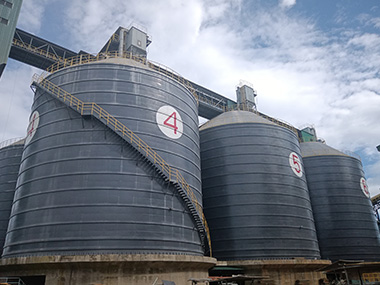
A cement terminal in Indonesia had conveyor supports welded directly to the silo shell. Within a year, fatigue cracks developed at the connection points due to conveyor vibration and thermal cycling. We redesigned with independent supports, eliminating the vibration transfer. The $25,000 repair taught us: always isolate vibrating equipment from the silo shell.
Load Analysis
Vertical loads: Dead weight plus material being conveyed. Apply dynamic factors 1.25-1.5 for starting/stopping. Horizontal loads: Belt pull tensions, seismic, wind, and material impact.
Structural Connections
Reinforce shell openings with stiffener rings. Maintain 150mm edge distance from welds. Use bolted connections for equipment mounting. Include vibration isolation for rotating equipment.
Access Platforms
Design for 3.0 kN/m² live load. Minimum 600mm walkway width, 900mm platform width. Include 100mm toe boards and intermediate rails. Provide caged ladders for heights > 2.5m.
Frequently Asked Questions
Q: Can conveyors be supported from the silo?
Need conveyor integration? Manxing coordinates complete material handling systems. Request System Design