
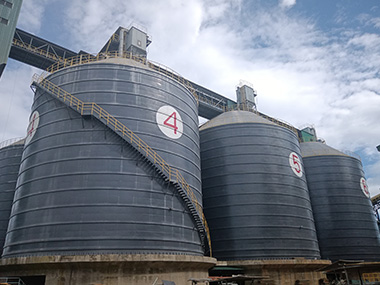

Key Takeaways
- Bolted vs Welded: Bolted silos offer faster installation and future relocation.
- Coating Quality: Hot-dip galvanizing provides 50+ year corrosion protection.
- Material Selection: Carbon steel, stainless, or aluminum for different applications.
- Design Standards: Eurocode, ASME, or GB based on location and requirements.
- Customization Options: Hopper configurations, accessories, and finishes.
Table of Contents
Silo Construction Types
A grain company in Kenya needed their silo relocated after 5 years when they moved facilities. Because they chose a bolted design, we disassembled and reassembled it at the new site for 15% of the original cost. A welded silo would have been scrap metal. That experience taught us: bolted construction preserves your investment.
Bolted silo advantages: Factory-applied coating quality. No field welding required. Faster installation (days vs weeks). Can be disassembled and relocated. Easy to add height or capacity later. Ideal for remote locations.
Material Options
Carbon steel: Most economical for general applications. Requires coating system for corrosion protection. Suitable for cement, grain, coal, and most materials. Design life 30-50 years with proper maintenance.
Stainless steel: Required for food-grade applications. Resists corrosion without coating. Higher initial cost but lower maintenance. Grades 304 and 316 for different corrosion resistance. Hygienic finish for food products.
Coating and Protection
Hot-dip galvanizing: Zinc coating provides sacrificial protection. 50+ year service life in most environments. Self-healing at scratches and cuts. No maintenance for first 20-30 years. Cost-effective for bolted silos.
Paint systems: Epoxy primers for adhesion and corrosion resistance. Polyurethane topcoats for UV protection. Total DFT 200-300μm for exterior service. Color options for aesthetic requirements. Touch-up possible in field.
Design Standards
Eurocode (EN 1993-4-1): European standard for steel silos. Covers both welded and bolted construction. Includes seismic and wind load requirements. Accepted in most countries worldwide.
ASME standards: Common in North America. API standards for petroleum applications. AWS standards for welding requirements. Local building codes may also apply.
Frequently Asked Questions
Q: Can bolted silos be used for food products?
A: Yes. Use food-grade gaskets and stainless steel bolts for food applications. Internal coating may also be required.
Q: What is the cost difference between bolted and welded?
Need silo selection guidance? Manxing recommends the best construction type. Request Technical Proposal