

Custom Silo vs Standard Silo: Which to Choose
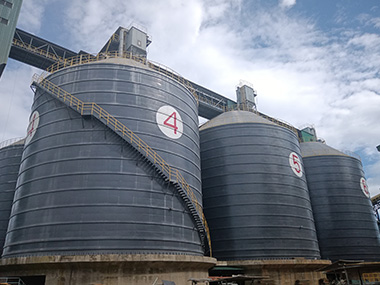
Standard silos work for generic bulk solids on flat, open sites. Custom silos are mandatory when your material behaves badly, your site is tight, or local codes demand it. If you're storing cement in a 5-bay warehouse, buy standard. If you're storing abrasive slag next to a fault line in a monsoon zone, you need custom engineering. Full stop.
The Real Cost of "Standard"
The Illusion of Off-the-Shelf Savings
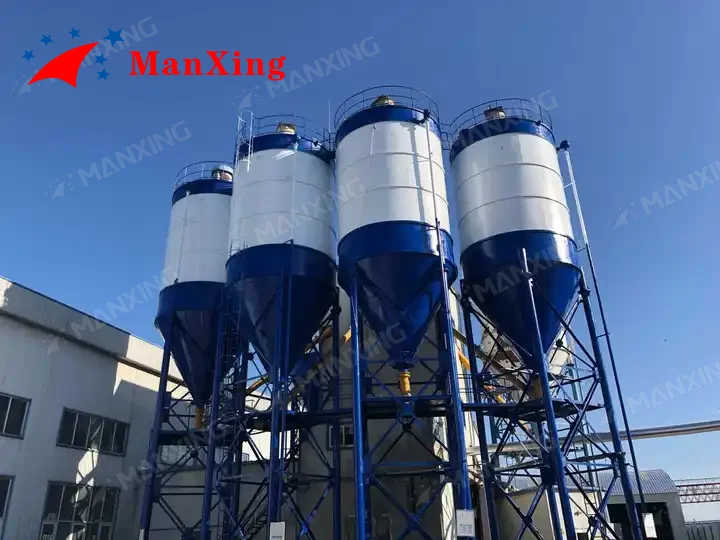
Standard silos look cheap on a quote. But modifying a standard design to fit your reality kills the savings. I've seen a $40,000 "standard" silo quote balloon to $95,000 because the client needed a 30-degree cone instead of a 45-degree cone to handle moist clinker. You pay for the engineering twice if you start standard and retrofit.
Standard assumes ideal flow. It assumes a generic bulk density of 1.2 tonnes per cubic meter. It assumes a lateral pressure ratio of 0.4. Real-world clinker is 1.4 tonnes per cubic meter and abrasive. Standard wall thickness is 4mm to 6mm. Clinker at 200°C needs 8mm and thermal expansion joints. If you use standard, you replace the lower shell rings in 5 years. Custom designs for 20-year lifespans.
When Standard Geometry Fails Your Material
Fly ash at 0.6 tonnes per cubic meter flows differently than slag at 1.6 tonnes per cubic meter. Standard hoppers are usually 55 to 60 degrees. That's fine for dry sand. It's a disaster for coal with 12% moisture content. You'll get bridging. You'll get Ratholing. You'll spend more on air cannons than the silo cost.
Fly ash fluidizes. Standard aeration pads don't work. You need custom fluidizing cones with 1.5mm sintered polyethylene pads. If you don't, the ash bridges. I've seen a 1,000-tonne fly ash silo emptied by a front loader because the standard aeration failed. That's a $15,000 cleanup and a week of downtime. Custom geometry prevents this.
When Custom Engineering Pays for Itself
Site Constraints That Break Standard Designs
Look, I'll be straight with you. Standard silos assume infinite flat land. I stood on a site in Vietnam in 40°C heat where the contractor had already poured the foundation for a standard 8-meter diameter silo. But the new conveyor bridge conflicted with the shell. We had 3 days to redesign before the concrete cured completely. We switched to a custom 5.5-meter diameter, 28-meter tall silo. We reused the existing foundation bolts by adding a custom base ring adapter. Saved the project $180,000 in demolition and re-pouring.
Standard would have required demolishing the retaining wall. That's a $300,000 problem. Custom engineering isn't a luxury. It's a site-specific necessity.
Material Flow: Bridging, Ratholing, and Segregation
Custom isn't just about size. It's about the physics inside. We use DEM (Discrete Element Modeling) to test flow patterns before we cut steel. If you're storing a blend of minerals, a standard silo segregates it. A custom-designed live bottom or a mass flow hopper fixes that. Mass flow hoppers require precise wall friction angles calculated to the degree. Standard doesn't do that.
If you're storing a mixture of sand and gypsum, standard causes segregation. Custom uses a splitter cone at the inlet. It costs $2,000 extra. It saves $50,000 in wasted material over the life of the plant. The math works.
Structural and Safety Considerations
Pressure Dynamics and Explosion Risks
Dust explosions don't care about your budget. Cement and coal dust are highly explosive. Standard silos often come with generic venting. But EN 14491 requires specific venting area calculations based on the dust's Kst value. If your coal has a Kst of 150 bar.m/s, a standard 2-square-meter vent might be undersized. You need a custom-designed explosion venting or suppression system integrated into the roof structure. ISO 21873 testing dictates this. Skip it, and you're betting the plant.
The Janssen effect dictates lateral pressure. Standard assumes a lateral pressure ratio of 0.4. For slag, it's 0.5. That's 25% more horizontal load on the stiffeners. If you use standard stiffeners, the shell wrinkles. I saw a 4,000-tonne coal silo in South Africa wrinkle because the engineer used standard stiffeners for a high-density material. The repair cost $90,000. Custom engineering calculates the exact pressure dynamics for your specific bulk solid.
Seismic and Wind Loads: The Local Variables
Eurocode 1991 gives you the baseline. But local amendments change everything. A standard silo designed for 120 km/h winds won't survive a 180 km/h typhoon in the Philippines. We had a job in the Philippines where the standard base ring thickness was 16mm. Local code required 22mm for seismic zone 4. That's a 37.5% increase in steel weight. Custom engineering catches this before fabrication. Standard catches it during the structural audit, causing 6-week delays.
Seismic zones require specific anchor bolt configurations. Standard uses generic bolt circles. Custom calculates the exact bolt tension based on the site's seismic coefficient. If you don't, the silo walks off its foundation during a 4.5 magnitude tremor. I've seen it happen.
The Procurement and Timeline Reality
Lead Times: Custom Isn't Always Slower
People assume custom means waiting longer. Not necessarily. Standard silos are often mass-produced in batches. If the factory is booked, you wait 14 weeks. A custom silo fabricated by an EPC contractor runs on a parallel track. We order steel while we're still detailing. I've delivered custom 8,000-tonne clinker silos in 18 weeks. Standard delivery from a catalog factory took a competitor 26 weeks because their rolling mill was down.
Steel procurement is the bottleneck. Standard factories wait for batch orders. We buy steel by the project. We cut it when we need it. The timeline advantage is real.
EPC Integration: Piping, Aeration, and Dust Collection
A silo isn't a standalone bucket. It's part of a system. Standard silos have generic nozzle locations. Your pneumatic conveying line enters at a specific angle. Your dust collector needs a specific roof penetration. Custom engineering places exactly where your process needs it. We once had to add an 800mm aeration line penetration on a standard silo. The field crew cut it with a torch. It warped the roof panel. Water ingress ruined 400 tonnes of gypsum. That's a $60,000 loss from a $500 modification.
Pneumatic conveying enters at 15 degrees. Standard silos have a vertical nozzle. You need a custom angled nozzle with a wear plate. If you don't, the conveying air erodes the shell in 6 months. We use 10mm AR400 steel for wear plates. Standard uses 3mm mild steel. It fails.
Making the Call: A Decision Framework
The 80/20 Rule of Silo Specification
Here's the thing. 80% of standard silo applications work fine. Dry, free-flowing material, open site, low seismic zone. But if you fall into the 20%—abrasive, moist, explosive, tight footprint, high wind—custom is the only way. Don't let a salesperson talk you into a standard design to hit a price point. Ask for the wall friction test data. Ask for the DEM analysis. If they can't provide it, you're buying a liability.
Standard is a catalog item. Custom is an engineered asset. The difference shows up in year 3 when the standard silo needs a $50,000 retrofit, and the custom silo is running flawlessly.
Standard silos assume a generic lateral pressure ratio. If your slag has a density of 1.8 t/m³ and a wall friction angle of 25 degrees, the actual horizontal pressure on the hopper walls is 15% higher than standard calculations predict. Undersize the stiffeners, and the shell buckles. Always run the Janssen equation with your specific material's wall friction angle before finalizing the shell thickness.
Case Study: Coal Plant in Indonesia
A coal preparation plant in Kalimantan needed 3,000 tonnes of storage. The site was a reclaimed coastal area with soft soil and a high water table. A standard silo required a massive ring foundation that would have cost $350,000 and taken 12 weeks to cure. We designed a custom piled foundation with a 1.2-meter thick raft and 24 concrete piles driven 18 meters deep. The silo diameter was 12 meters. We integrated a coal dust suppression system per EN 14491 with 4 explosion vents on the roof perimeter. Total cost: $1.2M. A standard silo with a retrofitted foundation would have cost $1.4M and taken 4 months longer. The plant manager told me it was the first time a silo project came in under budget. I believed him.
Frequently Asked Questions
Can we modify a standard silo later if our process changes?
You can, but it's expensive. Adding a slide valve or a new nozzle requires structural recalculation. Cutting into a standard shell without engineering sign-off voids the warranty and risks buckling. We've seen field crews cut 500mm holes with torches. The shell warped. The silo leaked. The retrofit cost 3 times what a custom design would have cost upfront.
How much more expensive is a custom silo?
Usually 15 to 25% more upfront. But the total cost of ownership is lower. You avoid retrofit costs, downtime from flow problems, and structural failures. I've seen custom designs save $200,000 over 10 years compared to a standard silo that needed constant air cannon maintenance and shell replacements. The math works.
What standards apply to custom silo design?
It depends on your location. In Europe, it's Eurocode 3 for structural steel and EN 14491 for explosion protection. In China, it's GB 50077 for silo structures. In the US, it's ACI 313 and ASME for pressure vessels. We design to the local code, not a generic international standard. Local amendments change everything. A standard silo designed for 120 km/h winds won't survive a 180 km/h typhoon. Custom engineering catches this.
Stop Guessing. Start Engineering.
You're not buying a steel can. You're buying 20 years of reliable bulk storage. At Manxing, we engineer custom silos for cement, clinker, fly ash, coal, and slag plants across 30+ countries. We handle the structural calculations, the flow dynamics, and the EPC integration. No generic catalog items. No retrofit surprises. Contact our engineering team for a site-specific assessment. We'll tell you if standard works. We'll tell you if it won't.