
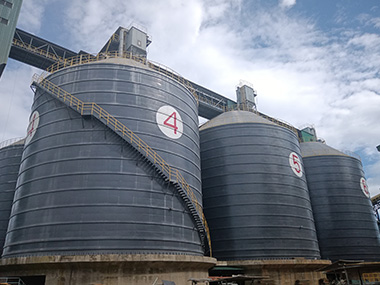

Imported Silo vs Domestic: What Actually Matters for Your Project
After building silos across 30+ countries, I'll give you the straight answer: imported silos offer proven engineering but cost 40–80% more. Domestic silos from established Chinese EPC contractors deliver equivalent structural performance at a fraction of the price — if you know what to verify. Here's how to decide based on your actual project needs, not brand reputation.
1. Engineering Standards: The Gap Has Closed
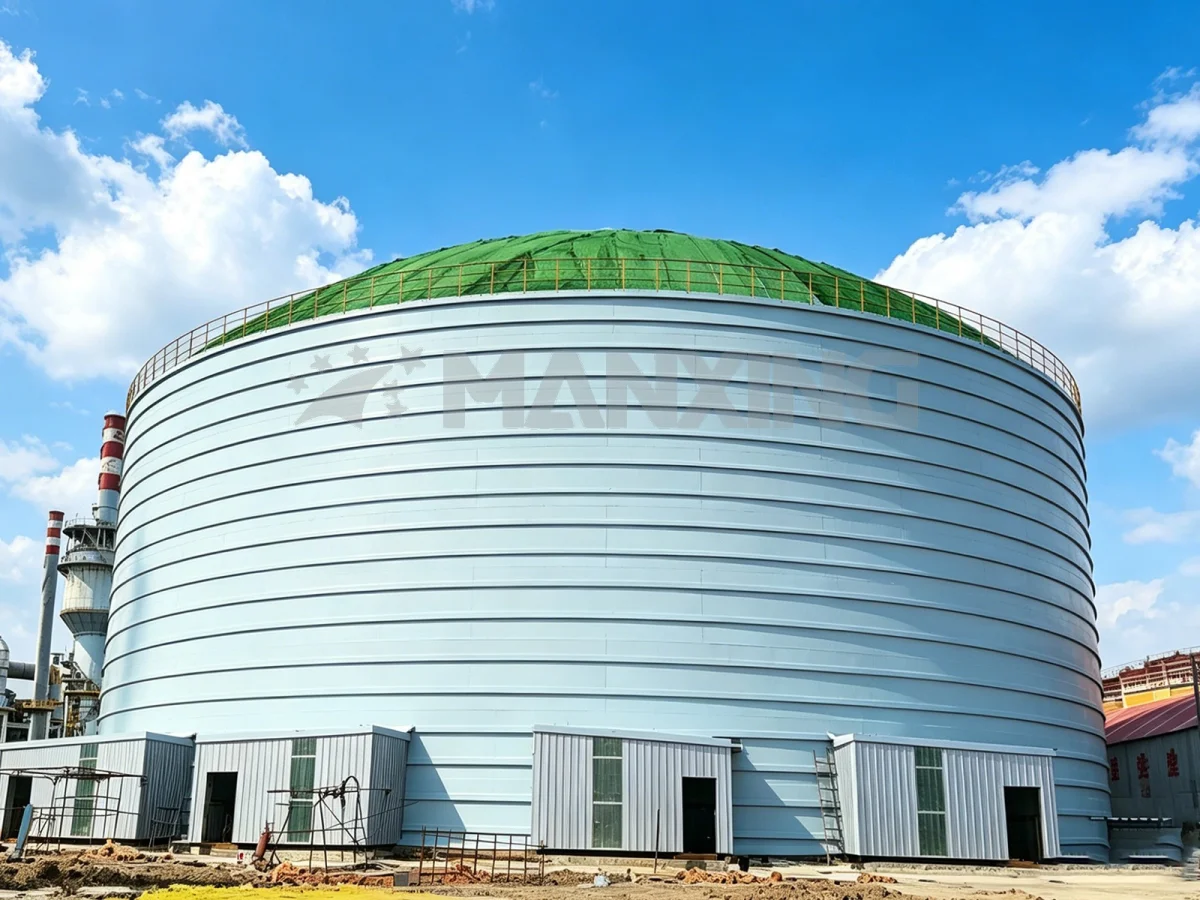
1.1 Design Codes Are Design Codes
Here's the thing. A silo designed to EN 1991-4 (Eurocode: Silos and Tanks) performs the same structural calculations whether the drawings come from Hamburg or Hefee. The physics of bulk solids pressure — Janssen's equation, eccentric discharge loads, thermal differentials — doesn't care about the nationality of the engineer running the numbers.
I've reviewed domestic Chinese silo designs that were more conservative than European equivalents. One project in Indonesia, the local contractor designed a 6,000-tonne cement silo with a wall thickness of 16mm. The European quote for the same spec? 14mm. Both met EN 1991-4. The Chinese design just used a higher safety factor on the hoop tension calculation. That's not worse engineering — it's a different risk appetite.
The real question isn't "imported vs domestic." It's whether the design is signed off by a qualified structural engineer who understands bulk solids behavior. I've seen imported silos with terrible eccentric discharge provisions. I've seen domestic silos with perfect pressure ring calculations. The badge on the drawing header tells you nothing.
1.2 Material Traceability
This is where you need to pay attention. Imported silos typically come with full EN 10204 3.1 material certificates — mill test reports for every plate, every beam. That's standard practice in European fabrication shops.
Domestic Chinese fabricators can provide the same. The difference is you have to ask for it explicitly and verify it. GB/T 700 and GB/T 1591 cover carbon and low-alloy structural steels that are equivalent to S355 and S275 in EN 10025. The steel is the same grade. The mills are the same mills — some of them export to Europe anyway.
On a project in Vietnam three years ago, I visited a domestic fabrication shop and pulled random samples from their stockpile. Sent them for third-party chemical composition testing. Every sample matched the certificates within tolerance. The shop had nothing to hide — they just weren't used to customers asking. Now they include full 3.1 certificates as standard in their packages.
1.3 Welding Quality and NDT
Welding procedure specifications (WPS) and welder qualifications under EN ISO 9606 or AWS D1.1 — these are the documents that matter. Not the country of origin.
A competent domestic EPC contractor will have qualified welding procedures for every joint configuration in the silo shell, cone, and ring beam. They'll have RT (radiographic testing) or UT (ultrasonic testing) reports for shell welds at the specified percentage — typically 10–20% for silo applications per EN 1993-4-1.
I'm not a fabricator that cuts corners on NDT. I've walked past shops where they'd skip RT on the bottom shell course — the course that carries the highest hoop tension. That's the one you test first. Always.
2. Cost: The Numbers Don't Lie
2.1 Purchase Price
Let's talk actual figures. A 5,000-tonne welded steel cement silo, complete with aeration system, level indicators, dust collector, and structural steel platform:
- European import: $1.2M–$1.5M FOB European port
- Domestic Chinese EPC: $650K–$800M CIF Southeast Asian port
That's a 40–50% cost difference before you even factor in shipping. For a 10,000-tonne clinker silo, the gap widens — European quotes I've seen run $2.2M–$2.8M, while domestic equivalents come in at $1.1M–$1.4M.
Where does the savings come from? Steel fabrication labor costs in China are roughly $8–$12/hour for skilled welders. In Germany, that's €35–€45/hour. Material costs are globally traded — steel plate is steel plate. The difference is labor, overhead, and margin.
2.2 Shipping and Logistics
This is the hidden cost that kills imported silo budgets. A 5,000-tonne silo ships in 15–20 flat-rack containers plus bulk shell plates on breakbulk vessels. From Rotterdam to Jakarta, you're looking at $180,000–$250,000 in freight alone. From a Chinese port to the same destination? $40,000–$60,000.
And then there's the lead time. European fabrication shops are quoting 28–36 weeks for delivery right now. Domestic Chinese shops with available capacity can turn around a 5,000-tonne silo in 12–16 weeks. On a project in the Philippines last year, that 12-week difference meant the difference between commissioning before the rainy season and commissioning three months late. The client chose domestic. They were pouring concrete on schedule while the imported-silo project next door was still waiting for containers to clear customs.
2.3 Spare Parts and Long-Term Costs
Here's where imported silos get expensive in ways nobody budgets for. Need a replacement butterfly valve for the aeration system? If it's a European-spec valve, you're waiting 6–8 weeks for shipment and paying 3x the price of an equivalent Chinese-manufactured valve that meets the same PN10 pressure rating.
Domestic silos use domestically available components. Solenoid valves, pressure transmitters, bin activators, air slides — all available from local suppliers with 48-hour delivery. That matters when you're running a 24/7 cement plant and a failed level indicator means you're flying blind on your inventory.
3. Fabrication Quality: What to Verify
3.1 Surface Preparation and Coating
A silo shell lives or dies by its coating system. For cement and clinker service, you want abrasive blast cleaning to Sa 2.5 (ISO 8501-1) followed by a zinc-rich epoxy primer at 60–80 microns DFT and a polyurethane topcoat at 50–70 microns. Total system: 110–150 microns.
I've inspected imported silos that arrived with coating already damaged from ocean transit — salt spray eats through thin primer in weeks. Domestic silos shipped from Chinese ports to Southeast Asia have a shorter sea voyage (5–10 days vs 25–35 days from Europe), which means less transit corrosion risk.
On a site in Malaysia, I watched a crew touch up coating damage on an imported silo for three weeks before erection could even start. The domestic silo on the adjacent line? Two days of touch-up. Same coating spec, different transit time.
3.2 Dimensional Tolerance
Shell plate rolling tolerance, verticality of the erected shell, flatness of the cone — these are controlled by the erection crew's skill, not the country of manufacture. EN 1090-2 execution class 2 is standard for silos. A good domestic erection crew hits the same tolerances as a European one.
The key is having a QA/QC inspector on site during erection. Not after. During. I check shell verticality with a total station every three courses. If you're out of plumb by more than H/500 (where H is the height of the erected section), you stop and correct. That's non-negotiable whether the plates came from China or Germany.
4. Lead Time and Project Execution
4.1 The Schedule Reality
Industrial projects live and die by schedule. A cement plant expansion that's three months late can cost $500K–$1M per month in lost production. The silo is almost always on the critical path — civil works, erection, commissioning, then mechanical handover.
Domestic Chinese EPC contractors can compress the timeline because the supply chain is local. Steel plate from the mill to the fabrication shop: 3–5 days. Fabrication to erection: 2 weeks. Erection of a 5,000-tonne silo: 6–8 weeks with a competent crew. Total from contract signing to mechanical completion: 14–18 weeks.
Imported silos? Add 8–12 weeks for ocean freight, 2–4 weeks for customs clearance, and you're at 24–30 weeks minimum. And that's assuming no port delays, no customs holds, no container shortages. In 2022, I saw imported silo components sit in Lagos port for 11 weeks because the shipping line misdeclared the cargo weight.
4.2 Site Supervision and Commissioning
A domestic EPC contractor can put a commissioning engineer on site within 48 hours of a request. For an imported silo, you're looking at visa processing, international flights, and per diem costs of $300–$500/day for a European engineer. Over a two-week commissioning period, that's an extra $5,000–$8,000 in supervision costs alone.
I've personally commissioned silos in 14 countries. The best commissioning happens when the engineer who designed the aeration system is the one standing next to the blower at 2am, listening for air leaks in the piping. That's not something you get from a third-party supervision company flying in for a three-day site visit.
5. When Imported Actually Makes Sense
I'll be straight with you — there are cases where imported silos are the right call.
Project financing tied to origin requirements. Some development bank loans (certain African Development Bank programs, for example) require a minimum percentage of equipment to be sourced from member countries. If your financing structure mandates European-origin equipment, that's a constraint you can't engineer around.
Extreme service conditions. For cryogenic silos operating at -40°C or high-temperature applications above 300°C, European fabricators have more documented experience with the specific steel grades and welding procedures. That experience premium is worth paying for.
Client specification mandates. Some major cement groups have approved vendor lists that exclude domestic Chinese fabricators. That's a corporate policy decision, not an engineering one. You work within the constraints you're given.
But for 90% of industrial bulk solids applications — cement, clinker, fly ash, coal, slag, sand, aggregates — a properly specified and inspected domestic silo performs identically to an imported one. The structural loads don't change based on the passport of the fabricator.
- EN 10204 3.1 material certificates for all structural steel (not just "mill certificates" — full 3.1 with chemical and mechanical test results)
- Qualified WPS/PQR for every weld joint type, witnessed by a third-party inspection body (TÜV, Bureau Veritas, or equivalent)
- Welder qualification records to EN ISO 9606-1 or AWS D1.1, current within 6 months
- Structural calculation package signed by a licensed structural engineer, including Janssen pressure calculations, wind load per EN 1991-1-4, and seismic load per EN 1998-1 if applicable
- Coating specification with DFT measurement plan — minimum 110 microns total system for cement service, 150 microns for coal or slag
Case Study: 10,000-Tonne Clinker Silo — Southeast Asia, 2023
Scenario: A cement plant in Laos needed a 10,000-tonne clinker silo for a 5,000 tpd expansion. The plant's European consultant specified an imported silo with a budget of €2.1M and a 30-week delivery.
What happened: We submitted a domestic alternative at €1.25M CIF with an 18-week delivery. The consultant pushed back — "domestic quality isn't acceptable." We invited them to audit our fabrication facility. They spent two days reviewing material traceability records, witnessing a WPS qualification test, and inspecting a completed 6,000-tonne fly ash silo that had been in service for four years.
Result: The consultant approved the domestic option. The silo was erected in 7 weeks (typhoon season was approaching — the crew worked 12-hour shifts to beat the weather). Commissioning took 10 days. Total project cost: €1.31M including site supervision. The client saved approximately €800K vs the imported quote and commissioned 12 weeks ahead of the imported schedule. The silo has been running for 14 months with zero structural or mechanical issues.
Key lesson: The resistance to domestic silos is almost never technical. It's perceptual. A facility audit and a reference list of comparable projects usually resolves it.
FAQ
Yes — if the contractor is competent. EN 1991-4, EN 1993-4-1, and EN 1998-1 are all design methodologies, not proprietary secrets. Any qualified structural engineer can apply them. The difference is whether the contractor invests in the engineering talent to do it properly. At Manxing, our design team has been applying Eurocode silo design for over a decade across projects in Europe, Africa, and Southeast Asia. The standards are the same. The execution is what varies.
Identical — 25–30 years with proper maintenance. Silo lifespan is determined by corrosion management, not country of origin. A well-coated domestic silo in a dry climate will outlast a poorly-coated imported silo in a coastal environment. The shell thickness loss rate for cement service is typically 0.02–0.05mm/year with a proper coating system. At that rate, even a 12mm shell has a 60-year theoretical life before reaching the minimum structural thickness. The coating is what you maintain, regardless of where the steel was rolled.
Three steps. First, request a reference list of completed projects with similar capacity and material — then call those clients. Second, ask for a facility audit. Any serious contractor will welcome it. Third, require a third-party inspection clause in the contract — an independent inspector (TÜV, SGS, Bureau Veritas) witnesses material testing, welding NDT, and coating inspection at defined hold points. The cost of third-party inspection on a $1M silo is typically $15,000–$25,000. That's cheap insurance against a $200K rework job.
Get a Silo Quote Based on Your Actual Project Specs
We don't do generic proposals. Send us your material characteristics, capacity requirements, site conditions, and applicable design codes — and we'll return a detailed technical and commercial offer within 10 working days.
Contact Manxing's silo engineering team:
www.manxingstorage.com