```html
Fire Suppression System Installation for Industrial Silos | Manxing
Fire Suppression System Installation for Industrial Silos
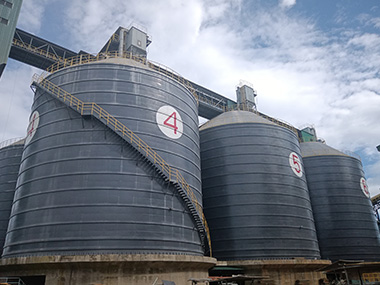
Fire suppression system installation for industrial silos typically requires 15 to 45 days depending on silo capacity, system type, and site conditions. The most common suppression agents for silo applications are carbon dioxide (CO₂), dry chemical powder, and water mist systems, each selected based on stored material properties and facility layout. This guide covers every phase of installation—from hazard assessment through commissioning—so you can protect personnel, equipment, and inventory with a code-compliant system.
1. Why Fire Suppression Is Non-Negotiable for Industrial Silos
Figure 1Figure 2Figure 3
1.1 Combustible Dust and Material Ignition Risks
Industrial silos storing cement, coal, fly ash, grain, or biomass materials face continuous combustible dust hazards. A dust cloud with a concentration between 20 and 200 g/m³ can ignite when exposed to a surface temperature above 200 °C or a spark with energy exceeding 10 mJ. Coal dust, for instance, has a minimum ignition energy of approximately 30 mJ and a lower explosive limit of roughly 40 g/m³. Once ignition occurs inside a confined silo, flame propagation can reach pressures of 7–10 bar within 200 milliseconds, causing catastrophic structural failure if no suppression system intervenes.
1.2 Regulatory and Insurance Requirements
NFPA 654 (Standard for the Prevention of Fire and Dust Explosions) and NFPA 12 (Standard on Carbon Dioxide Extinguishing Systems) mandate fire suppression for silos handling combustible particulate solids. Most industrial insurers require documented suppression system installation with annual recertification. Non-compliance can void coverage and expose facility operators to OSHA penalties exceeding $15,000 per violation.
1.3 Property and Business Continuity Protection
A single silo fire can cause $500,000 to $3 million in structural damage and inventory loss. Production downtime for a cement plant after a silo fire averages 3 to 8 weeks. A properly designed suppression system reduces fire-related downtime by over 90% and typically pays for itself within the first prevented incident.
2. Types of Fire Suppression Systems for Silos
2.1 Carbon Dioxide (CO₂) Total Flooding Systems
CO₂ systems discharge pressurized carbon dioxide to reduce oxygen concentration below the level that supports combustion (typically below 15% by volume). For most solid materials, a design concentration of 34% CO₂ by volume is required. A 3,000 m³ silo requires approximately 6,500 kg of CO₂ stored in high-pressure cylinders at 57 bar. CO₂ leaves no residue, making it ideal for silos storing cement, chemicals, or food-grade materials. However, CO₂ discharge creates a life-safety hazard in occupied areas, requiring pre-discharge alarms with a minimum 30-second delay and personnel evacuation protocols.
2.2 Dry Chemical Suppression Systems
Monoammonium phosphate (ABC powder) or sodium bicarbonate (BC powder) dry chemical systems interrupt the fire's chemical chain reaction. These systems achieve suppression in 15 to 30 seconds but require thorough post-discharge cleaning. A silo with a 5,000 m³ volume typically needs 2,000 to 3,500 kg of dry chemical agent stored in pressurized agent tanks. Dry chemical is particularly effective for coal and biomass silos where smoldering fires can persist after initial flame knockdown.
2.3 Water Mist and Deluge Systems
High-pressure water mist systems (operating at 80–200 bar) generate droplets smaller than 1,000 microns, achieving rapid cooling and oxygen displacement through steam expansion. Water consumption is 90% less than conventional sprinkler systems. A 2,000 m³ silo requires approximately 1,200 to 1,800 liters per minute of water mist flow. These systems suit silos storing materials that do not react with water, such as aggregates or certain ores. For water-reactive materials like calcium carbide, water-based systems are strictly prohibited.
⚡ Pro Tip: Always conduct a material compatibility analysis before selecting a suppression agent. Storing a water-reactive material in a silo equipped with a water mist system can trigger a violent exothermic reaction, escalating a small fire into a major explosion. Request a full Material Safety Data Sheet (MSDS) review during the design phase.
3. Key Design Considerations for Silo Fire Suppression
3.1 Silo Geometry and Volume Calculations
Accurate volume calculation is the foundation of suppression system design. For a cylindrical silo with conical bottom, total volume V = π × r² × h_cyl + (1/3) × π × r² × h_cone. The usable storage volume is typically 85