

Key Takeaways
- Foundation Settlement Monitoring: First 6 months critical for detecting issues.
- Bolt Torque Verification: Re-torque after first filling cycle.
- Seal Integrity Testing: Check all joints for air/moisture infiltration.
- Corrosion Protection Verification: Confirm coating thickness and continuity.
- Documentation Handover: Complete records enable future maintenance.
Table of Contents
Post-Installation Inspection
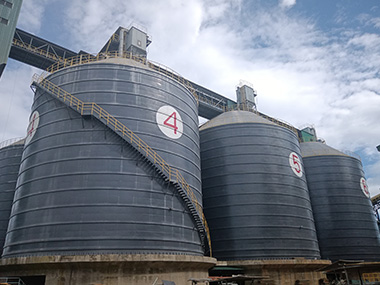
A food storage facility in Thailand discovered foundation settlement 3 months after installation. The silo had tilted 15mm off-plumb, causing door seals to leak. We caught it during our post-installation survey and corrected it with foundation grouting. That experience taught us: never skip the 90-day inspection.
Post-installation inspection checklist: Verify silo plumb (maximum H/500 deviation). Check all bolt torques to specification. Inspect coating for damage during installation. Test all access doors and hatches for proper sealing. Confirm drainage systems function correctly.
Structural Verification
Foundation monitoring: Install settlement markers at 4 points around base. Record initial readings before first filling. Monitor weekly for first month, then monthly for 6 months. Investigate any settlement exceeding 5mm or differential settlement over 2mm.
Structural integrity checks: Verify shell welds show no signs of distortion. Check stiffener alignment and connection integrity. Inspect anchor bolt nuts for proper torque. Confirm hopper support structure is secure.
Sealing and Waterproofing
Critical seal locations: Shell joint seals must be continuous and flexible. Roof-to-shell connection prevents water infiltration. Access door gaskets must compress properly. Penetration seals for pipes and conduits. Expansion joint covers.
Waterproofing verification: Conduct water spray test on roof and upper shell. Check internal condensation patterns. Verify moisture-sensitive materials remain dry. Test drainage systems with water flow.
Documentation and Handover
Complete documentation package: As-built drawings reflecting actual installation. Material certificates for steel and weld consumables. Inspection and test reports. Equipment operation and maintenance manuals. Spare parts list with recommended inventory.
Handover process: Conduct final walkthrough with owner. Review all systems and their operation. Transfer all documentation in organized format. Provide contact information for technical support. Schedule first maintenance inspection.
Frequently Asked Questions
Q: When should first post-installation inspection occur?
A: Conduct initial inspection immediately after installation, then at 30 days, 90 days, and 6 months to catch any settlement or movement.
Q: What settlement is considered acceptable?
Need installation verification? Manxing provides post-installation inspection services. Request Inspection