
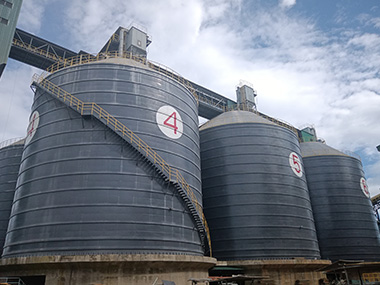

Aeration System Maintenance: Pad Cleaning and Air Flow Testing
If your silo aeration pads are clogged, you're not just losing efficiency — you're watching material bridge, rat-hole, and degrade in real time. The fix? Quarterly pad cleaning and annual airflow testing against the original design spec. Here's exactly how we do it, and what happens when you skip it.
Why Aeration Pads Fail Before They Should
Aeration pads don't die suddenly. They suffocate slowly. And by the time you notice the discharge rate dropping, the damage is already baked into the pad's pore structure.
The Clogging Mechanism Nobody Explains Right
Most maintenance guides say "clean the pads." They don't tell you what's actually clogging them. In cement and fly ash silos, it's a three-layer problem. First, moisture condenses on the pad surface during temperature swings — we've measured 12°C differentials across a silo wall in Inner Mongolia between day and night. That moisture binds fine particles into a crust. Second, oil from compressed air systems migrates through the pad matrix. Even a well-maintained compressor puts out 0.01–0.1 mg/m³ of oil aerosol. Over 18 months, that's enough to gum up 40% of the pore volume. Third — and this is the one that kills pads fastest — calcium carbonate and calcium sulfate precipitate from the material itself when moisture is present. You can't filter that out. It grows inside the pad.
We pulled a set of sintered polyethylene pads from a clinker silo in Vietnam last year. They'd been in service for 26 months. The top 3mm was hard as concrete. Below that, the pores were 60% occluded with calcium sulfate crystals. The original airflow capacity was 2.5 m³/h per pad. We measured 0.7. That's a 72% loss, and the plant had been running the blowers at full speed for months trying to compensate.
What the Design Spec Actually Says
Every aeration system has a design airflow rate, and it's not a suggestion. For cement, the typical spec is 1.5–2.5 m³/h per square meter of aeration pad area at a pressure of 0.2–0.5 bar. For fly ash, it's lower — 0.8–1.5 m³/h/m² — because the material is lighter and fluidizes more easily. For coal, you're looking at 1.0–2.0 m³/h/m² depending on particle size and moisture content.
The problem is that most plants never test against these numbers. They run the blowers, hear air moving, and assume everything's fine. I've been on sites where the blower was delivering rated airflow at the outlet, but the pads were passing less than half of it. The air was taking the path of least resistance — leaking through flange gaskets, cracked manifolds, and bypass valves nobody knew were stuck open.
Pad Cleaning: Methods That Actually Work
You can't just blow compressed air through a clogged pad and call it maintenance. That moves the problem around. Here's what we've found works, ranked by effectiveness.
Mechanical Cleaning — The First Step
For surface crusts, a soft brass brush and a vacuum with a HEPA filter will remove the top layer. Don't use steel wire brushes — they score the pad surface and create channels that concentrate airflow in the wrong spots. We've seen pads that were "cleaned" with wire brushes develop preferential flow paths within two weeks. The material fluidized in one spot and stayed dead everywhere else.
For sintered ceramic pads, you can go slightly more aggressive. A nylon brush with 0.3mm bristles works. But sintered polyethylene pads — the most common type in cement and fly ash applications — are softer. Treat them like a filter element, not a structural component.
Chemical Cleaning — When Mechanical Isn't Enough
When calcium sulfate or calcium carbonate has precipitated inside the pad matrix, you need chemistry. A 5–10% hydrochloric acid solution dissolves calcium deposits in 30–60 minutes. But here's the catch: HCl also attacks the polyethylene matrix if you leave it too long. We use a 7% solution at 25°C, soak for 45 minutes maximum, then flush with clean water until the runoff pH is above 5.5.
For oil contamination, a hot water wash at 60–70°C with a non-ionic surfactant works better than solvents. Solvents can swell certain pad materials and permanently alter pore size. We learned that the hard way on a project in Saudi Arabia — 200 pads, all warped after a solvent soak. Had to replace the entire set. Cost us $18,000 and three weeks of downtime.
When to Replace Instead of Clean
Here's a rule of thumb we use: if cleaning restores less than 85% of the original airflow capacity, replace the pad. The remaining 15% loss is a sign that the pore structure has been permanently altered — either by chemical attack, thermal degradation, or mechanical fatigue. Running pads below 85% capacity means your blowers work harder, your energy costs climb, and you still don't get reliable material flow.
Pad life varies wildly by application. In a dry cement silo with good air filtration, sintered polyethylene pads last 4–6 years. In a fly ash silo with high moisture and SO₂ exposure, you might get 18–24 months. In a coal silo with abrasive dust and temperature cycling, plan on 2–3 years. Budget accordingly.
Airflow Testing: The Procedure Most Plants Skip
Airflow testing isn't complicated. It's just tedious. And that's why it gets skipped.
What You Need
A calibrated hot-wire anemometer or a vane anemometer with a range of 0.5–30 m/s. A manometer capable of reading 0–1,000 Pa. A tachometer for blower speed. And the original aeration system design drawings — specifically the pad layout, manifold sizing, and blower curve.
If you don't have the design drawings, you're testing blind. You can measure airflow, but you won't know if it's right. We've been called to sites where the "maintenance team" had been adjusting blower speeds based on gut feel for three years. The pads were running at 140% of design airflow in some zones and 30% in others. The material in the low-flow zones had compacted so hard we needed a pneumatic hammer to break it loose.
The Test Sequence
First, verify blower output. Check the blower speed against the design RPM. Measure discharge pressure at the blower outlet. Compare to the blower curve. If the blower isn't delivering rated flow at rated pressure, fix the blower before you touch the pads.
Second, test each aeration zone individually. Most silos have 4–12 zones, each fed by a separate manifold with an isolation valve. Close all zones except one. Measure airflow at each pad in that zone using the anemometer held 50mm above the pad surface. Record the reading. Move to the next pad. A zone with 20 pads takes about 45 minutes to test properly.
Third, compare to design. The design spec will state a target airflow per pad or per square meter. If any pad is more than 20% below the zone average, it's clogged or damaged. If an entire zone is low, check the manifold — you might have a collapsed flex connection, a stuck valve, or a blockage at the zone inlet.
Fourth, check for cross-zone leakage. With one zone open and all others closed, walk the silo floor and listen. Air leaking from closed zones means the isolation valves aren't sealing. We found a butterfly valve in a Malaysian plant that looked closed but had a 15mm gap because the actuator had slipped. That one valve was bleeding 30% of the airflow from the adjacent zone.
Frequency and Documentation
Test airflow annually at minimum. In harsh applications — high moisture, high dust loading, abrasive materials — test every six months. Document everything. Pad number, zone, measured airflow, ambient temperature, blower pressure, date, and the name of the person who did the test.
Why document? Because trends matter more than single readings. A pad that tested at 2.1 m³/h last year and 1.8 m³/h this year is degrading on a predictable curve. You can plan the replacement. A pad that tested at 2.1 and then 0.9 has a sudden failure — maybe a crack, maybe a manifold blockage. That's a different problem requiring a different response.
Common Mistakes That Kill Aeration Systems
I've audited aeration systems on six continents. The same mistakes show up everywhere.
Running Blowers Continuously
Some plants run their aeration blowers 24/7 "to keep the material flowing." This is backwards. Continuous aeration compacts fine materials by driving air through them constantly. The particles pack tighter, and you end up needing more air to fluidize them. It's a death spiral.
The right approach is intermittent aeration — 15–30 minutes of airflow before and during discharge, then off. For cement, we typically program 20 minutes on, 40 minutes off during active discharge periods. For fly ash, it's 10 minutes on, 30 minutes off. The material stays loose, the pads stay cleaner, and you cut blower energy consumption by 50–60%.
Ignoring Air Quality
The air going into your aeration pads is only as clean as your supply system. Oil, moisture, and particulate in compressed air will destroy pads faster than anything else. A proper aeration air system needs: a refrigerated dryer (dew point 3°C), a coalescing filter (0.01 micron), and a particulate filter (1 micron). Check the filters monthly. Replace the coalescing element annually.
We visited a plant in East Africa where the aeration air was being drawn directly from the plant compressed air header — no dedicated dryer, no filters. The pads were black with oil and crusted with moisture-borne dust. They'd been replaced twice in 18 months. We installed a dedicated blower with inlet filtration and a small refrigerated dryer. Pad life went from 9 months to 4 years.
Mismatched Pad Types
Not all aeration pads are interchangeable. Sintered polyethylene works for cement, fly ash, and most powders. Sintered ceramic handles higher temperatures — up to 200°C — which you need for hot clinker or slag. Woven fabric pads are cheap but clog fast and are nearly impossible to clean. Perforated metal plates work for coarse materials like gravel and coal but don't distribute airflow evenly enough for fine powders.
Using the wrong pad type is a silent killer. We saw a plant in South America using woven fabric pads in a cement silo because they were 60% cheaper than sintered polyethylene. The pads lasted 4 months. The sintered pads we replaced them with are still running after 3 years. The "cheap" option cost them three times as much over the same period.
Case Study: 3,200-Tonne Fly Ash Silo — Pad Recovery
A power plant in Jiangsu Province called us about a 3,200-tonne fly ash silo that hadn't discharged properly in weeks. The material was bridging at the 8-meter level, and the plant was trucking fly ash to a landfill because they couldn't get it out of the silo.
We found 144 aeration pads across six zones. Visual inspection showed heavy surface crusting — a white, chalky layer about 2mm thick. Airflow testing revealed that 67 pads (47%) were below 50% of design capacity. Three zones were averaging 0.4 m³/h/m² against a design spec of 1.2 m³/h/m². The blowers were running at full speed and still couldn't push enough air through.
The root cause was a failed air dryer. The refrigerated dryer had been out of service for five months — the compressor had failed, and nobody had repaired it. Moisture-laden air had been flowing through the pads continuously, causing calcium sulfate precipitation throughout the pad matrix.
We replaced the dryer, chemically cleaned 78 pads that were recoverable, and replaced 66 pads that had passed the point of no return. Total cost: $22,000 for pads, $4,500 for the dryer repair, and three days of downtime. The plant had been spending $8,000 per week trucking fly ash to landfill. The payback was immediate.
We also installed a differential pressure monitor across the pad manifold — a $300 instrument that gives early warning when pad resistance starts climbing. The plant manager told us later that the first alarm caught a partial blockage in Zone 4 after a rainstorm pushed moisture into the air lines. They cleaned the filters and flushed the manifold. Problem solved in 20 minutes instead of three weeks.
FAQ
Q: How often should aeration pads be cleaned?
A: Inspect quarterly. Clean when airflow testing shows a 15–20% drop from baseline. In high-moisture applications, you might need to clean every 3–4 months. In dry, clean applications, annual cleaning is usually sufficient. The key is testing — don't clean on a fixed schedule, clean based on measured performance.
Q: Can I test airflow without specialized equipment?
A: Not accurately. A hot-wire anemometer costs $200–500 and pays for itself the first time it catches a failing zone. Without it, you're guessing. Some plants use a simple smoke test to check if air is flowing, but that tells you nothing about flow rate. You need numbers to make decisions.
Q: What's the typical cost to replace aeration pads in a cement silo?
A: For a standard 2,000-tonne cement silo with 80–120 sintered polyethylene pads, budget $8,000–$15,000 for pads plus $3,000–$5,000 for labor. Larger silos (5,000–10,000 tonnes) with 200+ pads run $20,000–$40,000. The cost of not replacing them — in lost production, material waste, and emergency downtime — is typically 5–10 times higher.
Need Help With Your Aeration System?
Manxing designs, builds, and maintains aeration systems for cement, fly ash, coal, and slag silos worldwide. We've commissioned systems in 30+ countries and we've seen every failure mode there is. If your silo isn't discharging reliably, send us your design drawings and we'll tell you exactly what's wrong — before we touch a single pad.