
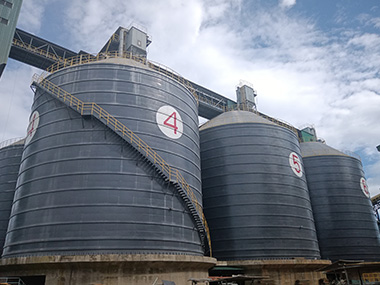

Silo Level Monitoring and Blockage Detection: What Actually Works in Bulk Solids
You need level monitoring to prevent overfilling, avoid structural damage, and keep your process running. You detect blockages by tracking pressure differentials, acoustic signatures, and mass flow imbalances—not just waiting for the conveyor to run empty. Get the level wrong, and you're looking at a $50,000 cleanup. Miss a blockage, and your whole plant goes down.
The Physics of Bulk Solids Inside a Silo
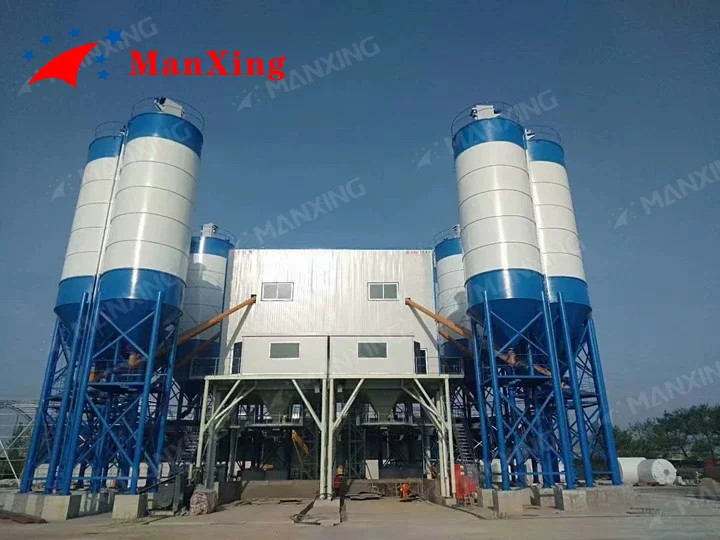
Flow Patterns: Mass Flow vs. Funnel Flow
Mass flow is the gold standard. The entire material column moves uniformly. Funnel flow is a disaster waiting to happen. You get a channel down the middle, and the material on the walls just sits there. For cement, that sitting material hydrates. For coal, it oxidizes and spontaneously combusts. I've seen a 4,000-tonne coal silo in Indonesia where the walls hadn't seen fresh material in 18 months. The angle of repose was a myth; the material was welded to the wall.
A mass flow hopper requires a steep cone—usually 60 to 70 degrees from horizontal—and a friction coefficient below 0.4. If your silo has a flat bottom with a simple center chute, you're running funnel flow. Accept it, and design your monitoring around it. You can't force mass flow out of a poorly designed hopper, no matter how many sensors you bolt to it.
The Bridging and Ratholing Problem
Bridging is when the material forms a stable arch over the outlet. It can hold back 100 tonnes of weight. Ratholing is when the material flows only in a narrow channel above the outlet, leaving the rest stagnant. Both kill your discharge rate to zero, but your level gauge might still read 80% full. That's the trap.
The cohesive strength of the material dictates the critical arching dimension. For dry fly ash, it's around 0.8 kPa. For moist cement, it can jump to 4.0 kPa. If your outlet is smaller than the critical arching dimension, you will bridge. Period. I remember a project in Malaysia where the fly ash bridged solid over a 1.2m outlet. The level gauge read empty. The operator kept feeding. We pulled 80 tonnes off the roof at 2am because the relief valves failed. Don't be that guy.
Level Monitoring Technologies: Matching the Tool to the Material
Continuous Level Measurement (Radar, TDR)
You need to know the exact volume, not just "full" or "empty." Non-contact radar is the workhorse. But not all radar is equal. Old 26 GHz units struggle with heavy dust. The dust attenuates the signal, and you get a weak echo. 80 GHz FMCW (Frequency Modulated Continuous Wave) is the game-changer. The narrow beam angle—3 degrees—lets you ignore the silo walls and internal structures. It cuts right through the dust. IEC 62591 covers the standard for radar level measurement.
We spec 80 GHz for cement and clinker silos. It handles temperatures up to 200°C and gives you 1mm accuracy over a 30-meter range. TDR (Guided Wave Radar) is another option. You drop a cable or rod into the silo. It measures the time of flight along the probe. It's great for narrow silos with lots of internal obstructions, but the probe takes a beating. If you're storing slag or aggregate, the impact will snap a cable probe in six months. Use a rigid rod, or stick to non-contact radar.
Point Level Detection (Rotary Paddle, Vibrating Fork)
Continuous measurement is expensive. Sometimes you just need to know if the silo is full or empty. Point level switches are your high and low alarms. Rotary paddle switches are the old faithful. A motor spins a paddle. When the material hits it, the torque shifts, and the microswitch trips. They work great for heavy, granular materials like clinker or aggregates. But they have moving parts. The bearing seizes, the paddle bends, and you get a false "full" signal. I've seen plants bypass these with a piece of wire because they fail so often.
Vibrating forks are better for powders. Two tuning forks vibrate at 120 Hz. When material covers them, the frequency drops, and the switch trips. No moving parts to break. But if you get material build-up on the forks, they'll give a false positive. You have to keep them clean. For explosive atmospheres—like coal or grain dust—you need ATEX or IECEx certification. Don't cheap out on the certification. A spark in a coal silo is a bomb.
Blockage Detection: Beyond the Level Gauge
Acoustic and Pressure-Based Detection
A level gauge tells you how much is in the silo. It doesn't tell you if it's moving. Blockage detection requires listening to the silo. Acoustic sensors—essentially ruggedized microphones—are mounted on the silo walls or the discharge chute. When material flows, it generates a specific acoustic signature. A hiss, a rumble. When a blockage forms, the sound changes. The hiss stops. The system detects the drop in acoustic energy and triggers an alarm. We set the threshold at 150 dB for heavy materials, but it varies.
Pressure sensors on the aeration lines are another method. If you're using pneumatic conveying or aeration to move material, a sudden spike in aeration pressure means the material isn't flowing. The air has nowhere to go. A pressure differential of 0.5 bar above normal operating pressure usually means a bridge has formed. ISO 15012 covers dust explosion prevention, and monitoring these pressure spikes is critical. A blockage can lead to over-pressurization if the compressor keeps pushing.
Flow Meters and Mass Estimation
The most reliable blockage detection is mass balance. You measure the feed rate in, and the discharge rate out. If you're feeding 500 tonnes per hour into the silo, and the discharge belt is running, but the scale on the belt reads 0 t/h, you have a blockage. Impact flow meters are mounted on the conveyor belt. They measure the force of the material falling onto the belt. They're accurate to within 2%.
Correlate this with the level gauge. If the level gauge is steady, but the discharge meter reads zero, the material is ratholing. It's flowing out of the center, but the level isn't dropping because the walls are holding the rest. This is a classic failure mode. The operator thinks the silo is fine because the level is 60%. But the active flow channel is only 1 meter wide. The rest is dead storage.
Integration and Alarm Management
Connecting to the DCS/PLC
All this data is useless if it sits on a local display. You need to feed it into the plant's DCS or PLC. 4-20mA analog signals are standard for level. Modbus RTU or Profibus for the smart sensors. Hardwire the high-level alarm directly to the feed conveyor shutdown. Don't rely on the DCS logic for that. If the DCS fails, the high-level alarm must physically cut the power to the belt. We've seen DCS servers crash during a thunderstorm. The silo kept filling. The roof buckled. Hardwired interlocks are non-negotiable.
False Alarms and How to Kill Them
False alarms are the enemy. If your system cries wolf, the operators will ignore it. Or worse, bypass it. The biggest cause of false alarms is condensation and dust build-up on sensors. A radar lens covered in cement dust will read "full" forever. You have to implement alarm delays. If the high-level switch trips, wait 10 seconds. If it's still tripped, then alarm.
For blockage detection, use a time delay. If the discharge rate is zero for 5 minutes, but the level is dropping, it's not a blockage—it's just a gap in the feed. Logic is everything. Program the system to understand the process, not just the sensor state.
If a blockage forms, it usually happens during the first 30 minutes of a restart after a weekend shutdown. Why? Moisture condensation. The material sits, cools, and absorbs humidity. The cohesive strength doubles. When you restart the blower, the material is too heavy to fluidize. It bridges instantly. Always run a dry purge cycle for 10 minutes before introducing moist material into a cold silo.
Case Study: The Clinker Silo in Vietnam
A 5,000-tonne clinker silo in central Vietnam was experiencing weekly blockages. The operators were using a single 26 GHz radar for level, and a rotary paddle for high-level. The radar kept losing signal due to the heavy dust during filling. The paddle was constantly jammed by the abrasive clinker dust. They were flying blind.
We replaced the radar with an 80 GHz FMCW unit. We swapped the paddle for a vibrating fork rated for 250°C. We added acoustic sensors on the discharge chute and a mass flow meter on the discharge belt. We integrated everything into the existing Siemens S7 PLC. The logic was simple: if the discharge belt is running, the flow meter reads < 10 t/h, and the acoustic sensor reads < 100 dB, trigger a blockage alarm.
Result: Zero unplanned shutdowns in 12 months. The maintenance crew went from unblocking the chute twice a week to zero interventions. The ROI was 4 months.
FAQ
Can radar level measurement work in high-dust environments?
Yes, but you have to use the right frequency. 26 GHz radar struggles with heavy dust because the signal attenuates. 80 GHz FMCW radar has a narrow 3-degree beam angle that cuts through dust. It's the standard for cement and clinker silos now.
What's the best way to detect a rat-hole in a silo?
Mass balance. A level gauge won't catch it because the material level stays constant while the center drains out. You need a flow meter on the discharge belt. If the belt is running but the flow meter reads zero, you have a rat-hole. Acoustic sensors on the walls can also detect the lack of flow noise.
How often should we calibrate silo level sensors?
Every 6 months for continuous radar. Every 3 months for point level switches like vibrating forks. If you're handling abrasive materials like slag or coal, check the sensor housing for wear monthly. A worn housing changes the calibration.
Need a Reliable Silo Monitoring System?
Manxing designs and installs EPC silo systems with integrated level monitoring and blockage detection. We spec the right sensors for your material, and we program the logic so you don't get false alarms at 3am.
Talk to Our Engineering Team