
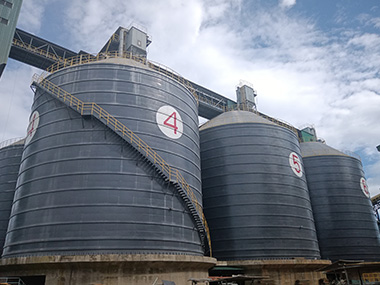

High-Temperature Material Solutions for Industrial Silos: What Works Above 200°C
When bulk material enters a silo above 200°C, standard carbon steel starts losing roughly 15% of its yield strength. For sustained temperatures above 350°C, you're looking at stainless steel grades like 309S or 310S, refractory-lined shells, or a hybrid design — and the wrong choice will cost you a shutdown within 18 months. This article covers what actually works, with numbers from projects we've commissioned across 30+ countries.
1. Why Temperature Changes Everything in Silo Design
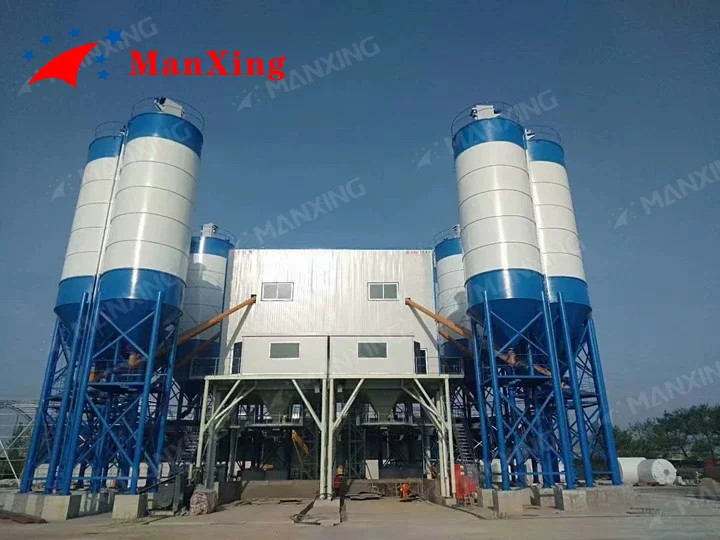
The 200°C threshold nobody talks about
Most silo design codes — EN 1991-4, Eurocode 3 — assume ambient-temperature material. The moment you cross 200°C, carbon steel's yield strength drops measurably. At 250°C, you've lost about 8-10% of structural capacity. At 400°C, that number hits 30-35%. I've seen engineers size a silo shell for 600 tonnes of clinker at 50°C discharge temperature, then watch the plant start dumping clinker straight from the cooler at 280°C. The shell didn't fail immediately. It deformed over 14 months, and by the time they called us, the cone section had ovalized by 40 mm.
That's the thing about thermal loading — it's not always catastrophic on day one. Sometimes it's a slow creep that nobody catches until the discharge gates jam.
Thermal cycling — the silent killer
Steady high temperature is one problem. Cyclic temperature swings are worse. A silo that receives hot material in 8-hour batches, then sits empty and cools overnight, experiences thermal fatigue at every weld seam. The expansion coefficient for carbon steel is roughly 12 × 10⁻⁶ per °C. On a 12-meter-diameter silo, a 250°C swing means the shell circumference changes by about 11 mm. That doesn't sound like much until you realize it's happening at every bolted and welded joint, 365 times a year.
We inspected a fly ash silo in Gujarat, India, that had developed hairline cracks at 60% of its circumferential welds after just three years. The ash cycled between 80°C and 310°C depending on the batch schedule. The plant had budgeted for a 20-year service life. They got three.
Material property degradation curves
Here's what the data actually shows for common silo materials under sustained temperature:
- Q235B carbon steel: Yield strength drops to ~85% at 200°C, ~70% at 350°C, ~55% at 450°C. Not recommended above 250°C for structural shells.
- Q345B low-alloy steel: Holds up slightly better — ~88% at 200°C, ~75% at 350°C. Usable to about 300°C with derating.
- 309S stainless steel: Maintains ~90% yield strength up to 500°C. Creep becomes a concern above 650°C.
- 310S stainless steel: Similar to 309S but with better oxidation resistance. Serviceable to 800°C for intermittent exposure.
- Refractory-lined carbon steel: The steel shell sees ambient or near-ambient temperatures. The refractory handles the heat. This is the most common solution for clinker and slag silos above 400°C.
2. Material Selection for High-Temperature Silos
Stainless steel grades that actually work
For silos handling material between 250°C and 500°C, 309S and 310S are the go-to choices. 309S (24Cr-13Ni) handles continuous service to about 500°C and intermittent exposure to 650°C. 310S (25Cr-20Ni) pushes that to 550°C continuous and 800°C intermittent. The nickel content is what buys you the high-temperature stability — it stabilizes the austenitic structure and prevents sigma phase embrittlement.
Cost-wise, 310S runs about 2.5-3.0 times the price of Q235B carbon steel per kilogram. For a 2,000-tonne cement silo, that can mean $180,000-$250,000 additional material cost. But if the alternative is replacing a carbon steel shell after five years, the math favors stainless every time.
I'm not a fan of 304 stainless for high-temperature silo applications. It's fine to about 400°C, but above that, sensitization kicks in — chromium carbides precipitate at grain boundaries, and you get intergranular corrosion. We replaced a 304 shell in a Malaysian alumina plant after four years. The original designer saved $40,000 on material. The replacement cost $320,000 including downtime.
High-temperature carbon steel and alloy options
If your material temperature stays below 300°C, you can use carbon steel with a structural derating factor. EN 1993-1-2 provides reduction factors for steel properties at elevated temperatures. For Q345B at 300°C, you'd apply a factor of about 0.85 to the yield strength in your shell calculations. That means thicker shell plates — typically 2-4 mm additional thickness compared to an ambient-temperature design.
For the 300-450°C range, 16MnR (equivalent to SA-516 Grade 70) is a common pressure-vessel steel that holds up reasonably well. It's not a silo standard, but we've used it for cone sections and transition hoppers where the thermal gradient is steepest. The key is keeping the shell temperature below 425°C — above that, graphitization starts, and the steel loses ductility permanently.
Refractory-lined steel shells
This is the workhorse solution for clinker silos. The steel shell stays cool — typically below 60°C on the outer surface — and a refractory lining handles the thermal shock. A typical lining system for a clinker silo looks like this:
- Anchor system: V-shaped stainless steel anchors (310S or Inconel 601), welded to the shell at 200-250 mm spacing.
- Primary lining: 75-114 mm of high-alumina castable (Al₂O₃ content ≥ 65%), rated to 1,400°C.
- Backup lining (optional): 25-50 mm of insulating firebrick or calcium silicate board to reduce heat transfer to the shell.
The total lining thickness adds 100-164 mm to your internal diameter. Factor that into your capacity calculations — a 10-meter ID silo with 150 mm of lining loses about 8% of its volumetric capacity. On a 5,000-tonne clinker silo, that's 400 tonnes of lost storage. We always tell clients to upsize the diameter by 300-400 mm to compensate.
3. Design Considerations Beyond Material Choice
Thermal expansion calculations
You can't just pick a high-temperature material and call it done. The entire structure has to accommodate thermal movement. A 15-meter-tall silo shell at 300°C will expand about 54 mm vertically compared to an ambient-temperature shell. Your foundation bolts, roof connections, and skirt transitions all need to handle that movement.
We use slotted holes in the skirt-to-base connection for thermal silos — typically 50 mm slots on a 12-meter-diameter shell. The bolts are torqued to snug-tight, not fully tensioned, so the shell can slide radially. It's a simple detail, but I've reviewed drawings from three different engineering firms that missed it. All three had field problems within the first year.
Insulation and cladding strategies
External insulation makes sense when you want to keep heat inside the silo — preventing condensation on the shell interior, maintaining material flowability, or protecting the outer shell from radiant heat. For cement and fly ash silos operating at 80-120°C, 50-75 mm of rock wool with aluminum cladding is standard. For clinker silos above 300°C, you're usually better off with internal refractory and no external insulation — the shell needs to dissipate whatever heat gets through the lining.
One exception: coal silos. Coal dust is explosive above its minimum ignition temperature (typically 160-200°C for bituminous coals), and you absolutely cannot let the shell surface exceed that. We designed a 3,000-tonne coal silo in Inner Mongolia with 100 mm of external mineral wool insulation and a temperature monitoring system on the outer shell. The insulation kept the shell surface below 50°C even when the coal inside was at 180°C. The monitoring system was tied to the plant's DCS — if any zone exceeded 60°C, an alarm triggered and the silo automatically emptied within 4 hours.
Discharge geometry at temperature
Hot material doesn't flow the same way cold material does. Clinker at 300°C has a bulk density about 8-12% lower than clinker at ambient temperature. Fly ash above 150°C can develop fluidization issues — the air trapped in the particle voids expands, and the material behaves more like a liquid than a solid. We've seen fly ash "flood" out of a silo cone because the aeration system was sized for cold material.
For hot-material silos, we increase the cone angle by 5-10° compared to standard designs. A typical cement silo cone is 60° from horizontal. For clinker at 250°C, we go to 65-68°. The steeper angle compensates for the reduced flowability and prevents arching across the discharge opening. It also means you lose some headroom — a 68° cone on a 10-meter-diameter silo eats up about 1.2 meters more vertical height than a 60° cone. Factor that into your building height.
4. Industry-Specific Applications
Clinker storage (cement plants)
Clinker leaves the rotary kiln at 1,200-1,400°C. By the time it reaches the silo, it's typically 65-100°C above ambient — so 100-150°C in most climates, but up to 250-300°C in hot climates or if the cooler is running below capacity. The silo itself doesn't see the full kiln temperature, but the thermal mass of a full clinker silo is enormous. A 10,000-tonne clinker silo holds enough heat to keep the material above 200°C for 48-72 hours after the kiln shuts down.
We use refractory-lined carbon steel for clinker silos almost exclusively. The lining protects the shell, and the steel provides the structural strength. The anchors are the critical component — we specify 310S V-anchors at 200 mm spacing in the lower third of the shell (where abrasion is highest) and 250 mm spacing above. The castable lining gets a minimum 114 mm thickness in the cone and lower shell, tapering to 75 mm in the upper shell. Total lining weight on a 12-meter-diameter, 30-meter-tall clinker silo runs about 45-55 tonnes.
Slag and fly ash handling
Ground granulated blast furnace slag (GGBS) typically enters the silo at 80-120°C. That's manageable with standard carbon steel, but the abrasion is severe — slag has a Mohs hardness of 5.5-6.0, and it will wear through an unlined carbon steel shell in 3-5 years at the impact zones. We line the cone and lower 3 meters of the shell with 16 mm wear-resistant steel plate (Hardox 450 or equivalent) or ceramic tiles bonded with high-temperature epoxy.
Fly ash is a different animal. It's light, it's dusty, and it's hygroscopic. When it's hot, it flows well. When it cools and absorbs moisture, it sets up like concrete inside the silo. We had a project in Shandong where a 1,500-tonne fly ash silo had been sitting idle for two weeks over the winter break. The ash cooled from 90°C to 15°C, absorbed moisture from the air, and solidified into a 400-tonne mass that blocked the discharge cone completely. They ended up drilling it out with pneumatic breakers over six days. Now we specify aeration pads and a minimum 2-hour air blast cycle every 12 hours for fly ash silos that might sit idle.
Coal and pet coke storage
Coal silos are the most dangerous high-temperature application because of the explosion risk. ISO 15012 and EN 14491 set the requirements for dust explosion prevention in silos. If coal enters the silo above 80°C, you need to monitor the gas composition (CO levels indicate spontaneous heating), maintain inert gas blanketing, and install explosion venting on the roof.
Pet coke is worse. It has a lower minimum ignition temperature than coal — as low as 130°C for some blends — and it generates CO at lower temperatures. We designed a pet coke silo in Saudi Arabia with a full inert gas system (N₂ injection to keep O₂ below 8%), continuous CO monitoring at three levels in the silo, and explosion vents sized per EN 14491. The shell was standard Q345B carbon steel with no special high-temperature material — the process kept the material below 70°C at all times. The safety systems cost more than the silo itself, but the alternative is a detonation that sends 2,000 tonnes of burning pet coke across the plant.
5. Common Failures and How to Avoid Them
Weld cracking from thermal fatigue
The most common failure mode we see in high-temperature silos is cracking at the shell-to-cone junction. That's where the thermal gradient is steepest — the cone is in contact with hot material, the shell above it is in contact with air. The differential expansion creates a stress concentration at the weld. After 2,000-5,000 thermal cycles, fatigue cracks initiate at the weld toe and propagate through the shell plate.
The fix is straightforward: grind the weld toe to a smooth profile (radius ≥ 3 mm), add a reinforcement pad at the junction, and specify post-weld heat treatment for thicknesses above 25 mm. We also move the shell-to-cone weld away from the highest thermal gradient zone by extending the cone 300-500 mm up into the shell. It costs maybe $2,000-$5,000 extra in fabrication. It adds 10-15 years to the weld life.
Shell distortion and buckling
Thin shells under thermal load can buckle locally. We've seen this on silos with shell thickness below 8 mm operating above 250°C. The steel loses stiffness, and the internal pressure from the material (even just the static head of a tall silo) causes outward bulging between stiffeners. The bulging is usually 20-50 mm over a 1-2 meter span, and it's permanent — the steel has yielded.
Prevention: increase shell thickness by 2-3 mm above the structural minimum, add external stiffeners at 1.5-2.0 meter vertical spacing, and limit the unsupported shell height to 3 meters between stiffeners. For a 2,000-tonne cement silo, that means adding 8-12 external ring stiffeners at $800-$1,200 each. Total cost increase: maybe $15,000. Cost of repairing a buckled shell in the field: $80,000-$150,000 plus 2-3 weeks of downtime.
Dust seal and gasket failures
High-temperature silos need roof access hatches, level instruments, and aeration inlets — all of which penetrate the shell or roof. The gaskets and seals at these penetrations are rated for specific temperature ranges. A standard EPDM gasket is good to about 120°C. Above that, you need silicone (200°C), PTFE (260°C), or graphite (450°C+). We've seen EPDM gaskets on a 250°C clinker silo roof hatch degrade to crumbling rubber within 8 months. The hatch leaked rainwater into the silo, which hit the hot clinker and generated steam. The steam pressure blew the hatch open at 3am and dumped 200 kg of clinker dust across the plant.
6. Cost-Benefit Analysis and Lifecycle Planning
Initial cost vs. maintenance cost
Here's a realistic comparison for a 3,000-tonne clinker silo, 12-meter diameter, 28-meter shell height:
- Option A — Carbon steel shell, no lining: Initial cost ~$280,000. Expected shell life at 250°C clinker: 5-7 years. Replacement cost: $280,000 + $120,000 downtime. 20-year lifecycle cost: ~$800,000-$1,000,000.
- Option B — Carbon steel shell with refractory lining: Initial cost ~$380,000 (including lining). Lining replacement every 8-10 years at $45,000-$60,000. Shell life: 25+ years. 20-year lifecycle cost: ~$520,000-$600,000.
- Option C — 310S stainless steel shell: Initial cost ~$620,000. Expected life: 20+ years with minimal maintenance. 20-year lifecycle cost: ~$650,000-$700,000.
Option B wins on lifecycle cost for most clinker applications. Option C makes sense when you can't afford the downtime for lining replacement — continuous-process plants that run 350 days a year. Option A is false economy, but we still see it specified by buyers who compare initial quotes without asking about service life.
Expected service life by material choice
Based on our project database across 30+ countries, here are the median service lives we've observed before major maintenance is required:
- Carbon steel shell, ambient temperature: 25-30 years
- Carbon steel shell, 150-250°C: 12-18 years
- Carbon steel shell, 250-350°C: 5-8 years
- Carbon steel with refractory lining, up to 400°C: 20-25 years (lining replacement at 8-10 years)
- 309S stainless steel, up to 500°C: 18-22 years
- 310S stainless steel, up to 600°C: 20-25 years
These numbers assume proper maintenance — annual bolt-torque checks, biennial shell-thickness measurements at wear zones, and lining inspections every 3 years. Skip the maintenance, and you can cut these numbers by 30-40%.
Case Study: 8,000-Tonne Clinker Silo — Vietnam
A cement plant in central Vietnam needed a new clinker silo to handle 8,000 tonnes of material discharged from the kiln at 280-320°C. The site was 4 km from the coast, so corrosion from salt air was a secondary concern. The original design from the plant's in-house team called for a Q345B carbon steel shell with no lining — they'd had "good experience" with unlined clinker silos at another plant.
We reviewed their existing silo: 6 years old, 12 mm shell thickness originally, now measuring 8-9 mm at the impact zones below the inlet. The cone had been patched twice. The shell above the cone showed visible ovalization — about 35 mm out-of-round on a 14-meter diameter. They were on track for a full shell replacement within 2 years.
Our design used a Q345B carbon steel shell with 114 mm refractory lining in the cone and lower 5 meters of the shell, tapering to 75 mm above. 310S V-anchors at 200 mm spacing in the high-wear zone. External stiffeners at 1.8 meter vertical spacing. Total project cost: $485,000, including steel shell, refractory, anchors, and installation supervision. The plant's original unlined design was quoted at $310,000 — a $175,000 difference.
We ran the lifecycle numbers for them: the unlined silo would need a $310,000 shell replacement in year 6-8, plus $150,000 in lost production during the 3-week shutdown. The lined silo would need a $55,000 lining replacement in year 10, with no shell work required. Over 20 years, the lined design saved approximately $400,000. They approved the project. We commissioned it in March 2022. As of the last inspection in late 2024, the shell thickness is unchanged and the lining shows no cracks or spalling.
FAQ
Q: Can I use a standard carbon steel silo for material at 200°C if I just add external insulation?
No. External insulation keeps heat in — it doesn't protect the shell from the material temperature. If your material is at 200°C, the shell is at 200°C (or close to it) regardless of insulation. You need to either derate the shell thickness per EN 1993-1-2, switch to a high-temperature steel grade, or add internal refractory lining. Insulation is for keeping material hot for flowability, not for protecting the shell.
Q: What's the maximum temperature for a refractory-lined carbon steel silo?
Practically, about 500°C for the material temperature. Above that, the refractory thickness required becomes excessive (200+ mm), and the heat that gets through the lining can still push the steel shell above 350°C. For material above 500°C — like direct kiln discharge — you need a refractory-lined shell with a backup insulation layer, or you need to let the material cool before it enters the silo. Most cement plants use a clinker cooler or a screw conveyor with cooling jacket to bring the temperature down before silo storage.
Q: How often should I inspect the refractory lining in a clinker silo?
Visual inspection through the roof hatch every 6 months. Detailed inspection (hammer test for hollow spots, anchor exposure check) every 3 years during a planned shutdown. If you see anchor heads exposed on the hot face, or if the lining surface has receded more than 20 mm from its original thickness, schedule a repair. A lining failure on a 300°C clinker silo can damage the steel shell within 2-3 weeks — the shell wasn't designed to take that temperature directly.
Need a High-Temperature Silo Design That Actually Lasts?
We've designed and commissioned silo systems for clinker, slag, fly ash, coal, and hot mineral applications across 30+ countries. Every project starts with a thermal analysis — not a catalog selection. If you're planning a new silo or troubleshooting an existing one that's failing early, we'll give you straight answers with numbers you can take to your board.
Contact Manxing's engineering team for a project review: manxingstorage.com — send us your material temperature, capacity requirements, and site conditions. We'll respond within 48 hours with a preliminary material recommendation and budget range.