
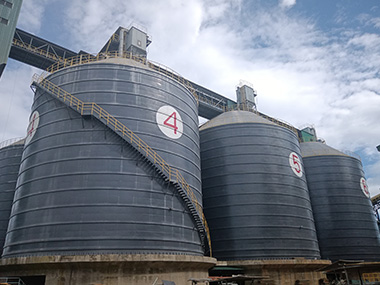

Key Takeaways
- Aluminum Resists Salt Spray: Natural oxide layer prevents corrosion in marine and salt storage.
- 75% Weight Savings: Aluminum silos weigh significantly less than steel alternatives.
- No Coating Required: Eliminates maintenance coating costs over service life.
- Lower Strength Requires Thicker Walls: Aluminum yield strength is 100-250 MPa vs 235-345 MPa for steel.
- Food and Chemical Applications: Ideal for corrosive chemicals and food-grade storage.
Table of Contents
When Aluminum Makes Sense
A salt storage facility in Shandong, China had replaced their carbon steel silo twice in 10 years due to corrosion. We designed an aluminum silo (5052-H32 alloy) that has now been in service for 12 years with zero corrosion maintenance. The higher initial cost was recovered in avoided replacement costs within 7 years.
Aluminum Alloys for Silo Construction
5052-H32: Good corrosion resistance, moderate strength. 6061-T6: High strength, heat-treatable. 3003-H14: Economical general purpose.
Corrosion Resistance Advantages
Aluminum forms a self-repairing oxide layer. Resists: salt spray, many acids, alkaline solutions, fertilizer chemicals, sulfur compounds.
Design Considerations
Lower yield strength requires thicker walls or additional stiffening. Higher thermal expansion (23.6 × 10⁻⁶/°C vs 12 × 10⁻⁶/°C for steel). Specialized welding procedures (MIG or TIG) required.
Frequently Asked Questions
Q: How much does an aluminum silo cost vs steel?
A: Material cost is 3-4x steel by weight, but with no coating required and reduced maintenance, lifecycle cost can be competitive.
Considering aluminum for your application? Manxing has designed aluminum silos for salt, chemical, and coastal applications. Request Aluminum Silo Consultation