Steel Silo Cloud Data Analytics | Manxing EPC Silo Solutions
Steel Silo Cloud Data Analytics
Steel silo cloud data analytics is a technology-driven approach that connects silo sensor networks to cloud platforms for real-time monitoring, predictive maintenance, and data-driven decision-making. By leveraging IoT sensors, edge computing, and machine learning algorithms, operators can reduce spoilage rates by up to 30%, cut unplanned downtime by 40%, and optimize inventory turnover across multi-site grain storage operations.
Architecture of Cloud-Based Silo Monitoring Systems
Figure 1Figure 2Figure 3
Sensor Networks and Data Acquisition Layers
A typical cloud-enabled steel silo system deploys 15–30 sensors per silo, including thermocouples (Type K, accuracy ±0.5°C), capacitive humidity sensors (±2% RH), piezoelectric pressure transducers for mass estimation, and ultrasonic level meters with ±1mm resolution. Data acquisition units sample at intervals ranging from 1 second to 5 minutes depending on criticality. Modbus RTU and MQTT protocols transmit data to local gateways, which aggregate readings from up to 50 silos per node before cloud transmission.
Edge Computing and Cloud Platform Integration
Edge gateways running ARM Cortex-A53 processors perform local data validation, compression, and anomaly flagging before uploading to cloud infrastructure. This reduces bandwidth consumption by approximately 60–70%. Cloud platforms typically ingest data through REST APIs or AMQP message brokers, storing time-series data in databases optimized for high-frequency industrial telemetry. Typical latency from sensor to cloud dashboard is under 3 seconds on 4G/LTE networks.
Real-Time Data Processing Pipelines
Stream processing engines handle 5,000–50,000 data points per second across a multi-silo facility. Apache Kafka or equivalent message queues buffer incoming telemetry, while stream processors apply rolling averages, rate-of-change calculations, and threshold comparisons. Processed data feeds into visualization dashboards, alerting engines, and machine learning inference pipelines simultaneously, ensuring operators receive actionable insights within seconds of a sensor reading.
Pro Tip: Always deploy edge computing nodes with local data buffering capacity of at least 72 hours. This ensures zero data loss during network outages and allows seamless backfill once connectivity is restored — critical for regulatory compliance in grain storage operations.
Key Performance Metrics Tracked by Cloud Analytics
Temperature and Humidity Profiling
Cloud analytics platforms map temperature gradients across silo heights using vertical thermocouple arrays spaced at 1.5–2.0m intervals. For wheat storage at 12% moisture content, the safe temperature ceiling is 15°C; analytics engines flag deviations exceeding ±2°C from baseline within 15 minutes. Relative humidity is tracked at multiple grain layers, with alerts triggered when interstitial humidity exceeds 65% RH — the threshold above which mold growth accelerates exponentially.
Inventory Volume and Mass Estimation
Mass estimation algorithms combine ultrasonic level measurements with grain density coefficients (e.g., 770 kg/m³ for wheat, 600 kg/m³ for corn) and moisture correction factors. Cloud systems achieve ±2.5% mass estimation accuracy compared to weighbridge measurements. Volume tracking updates every 15 minutes, generating automated inventory reports that reconcile inbound and outbound transactions with ±1.8% variance tolerance.
Structural Health and Stress Monitoring
Strain gauges and accelerometers mounted on silo walls and foundations monitor structural integrity in real time. Cloud analytics track hoop stress variations caused by thermal cycling, wind loads (up to 150 km/h design wind speed), and asymmetric discharge patterns. Vibration analysis detects abnormal frequencies indicating foundation settlement or bolt loosening, with automated alerts when stress values exceed 85% of design yield strength.
Predictive Maintenance Through Machine Learning
Corrosion Rate Prediction Models
Machine learning models trained on 3–5 years of historical sensor data predict internal corrosion rates with ±0.02mm/year accuracy. Inputs include humidity exposure duration, temperature cycling frequency, grain chemical composition (chloride content, pH), and coating condition indices. Predictive models schedule re-coating interventions 6–12 months before critical wall thickness thresholds are reached, extending silo service life by 15–20 years.
Aeration System Failure Detection
Fan performance baselines are established using airflow (m³/min), power consumption (kW), and pressure differential (Pa) signatures. Anomaly detection algorithms identify bearing degradation, belt slippage, and motor winding faults 2–4 weeks before catastrophic failure. Facilities using predictive aeration maintenance report 35% reduction in emergency repair costs and 28% improvement in grain quality preservation.
Automated Alert Thresholds and Response Protocols
Dynamic alert thresholds adapt based on seasonal conditions, grain type, and storage duration. A tiered escalation system routes Level 1 alerts (informational) to operators via mobile push notifications, Level 2 alerts (warning) to shift supervisors via SMS and email, and Level 3 alerts (critical) to plant managers with automated equipment shutdown protocols. Response time from alert generation to operator acknowledgment averages under 4 minutes.
Integration with Enterprise Resource Planning Systems
Inventory Management Synchronization
Cloud analytics platforms integrate with ERP systems via standardized APIs, pushing real-time inventory levels, quality grades, and storage duration data every 30 minutes. This eliminates manual stock counts and reduces inventory record discrepancies from typical 5–8% down to under 1.5%. Automated reconciliation flags mismatches between physical stock and ledger entries for immediate investigation.
Supply Chain Optimization Workflows
Predictive inventory analytics feed directly into procurement and logistics modules, generating automated purchase recommendations when stock levels fall below 20% capacity. Transportation scheduling algorithms consider silo fill rates, discharge queue priorities, and vehicle availability to reduce truck waiting times by 40–50%. Integrated systems achieve 12–18% reduction in total supply chain carrying costs.
Regulatory Compliance Reporting
Cloud platforms generate automated compliance reports for food safety standards, including temperature logs, fumigation records, and traceability documentation. Audit-ready reports compile data from 50+ sensors across multiple facilities, reducing report preparation time from 3–5 days to under 2 hours. Digital signatures and timestamped data chains ensure regulatory defensibility during inspections.
Data Security and Cybersecurity Considerations
Encryption Standards for Industrial IoT
All sensor-to-cloud communications employ TLS 1.3 encryption with AES-256-GCM cipher suites. Data at rest in cloud databases uses transparent data encryption (TDE) with customer-managed keys. Edge gateways implement secure boot chains and hardware security modules (HSMs) to protect cryptographic credentials, ensuring end-to-end data protection compliant with IEC 62443 industrial cybersecurity standards.
Access Control and Authentication Protocols
Role-based access control (RBAC) defines 5–8 permission tiers from read-only viewer to system administrator. Multi-factor authentication (MFA) is enforced for all cloud platform access, with session timeouts set to 15 minutes of inactivity. API access uses OAuth 2.0 token-based authentication with 1-hour token rotation. Audit logs capture every data access event with user ID, timestamp, and action details retained for minimum 7 years.
Disaster Recovery and Redundancy Planning
Cloud infrastructure maintains data replication across geographically separated availability zones with Recovery Point Objective (RPO) of under 1 minute and Recovery Time Objective (RTO) of under 30 minutes. Edge gateways store 72 hours of buffered data locally, ensuring zero data loss during extended network outages. Quarterly disaster recovery drills validate failover procedures and data integrity verification protocols.
Case Study: Regional Grain Terminal Cloud Analytics Deployment
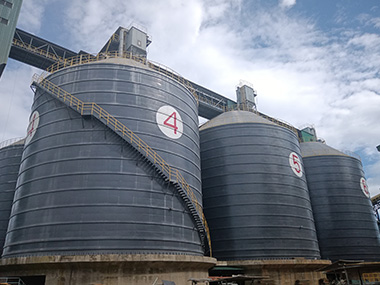
A 50,000-ton capacity grain terminal in Southeast Asia deployed cloud analytics across 24 steel silos storing rice, wheat, and corn. The system integrated 480 temperature sensors, 96 humidity probes, and 24 structural monitoring arrays. Within 12 months of operation, the terminal achieved a 32% reduction in grain spoilage (from 1.8% to 1.2% of total throughput), identified three aeration fan failures 3 weeks before breakdown, and reduced manual inspection labor by 240 hours per month. Inventory accuracy improved from 93.5% to 98.7%, and the facility passed two regulatory audits with zero non-conformances. Total annual savings exceeded $180,000 against a cloud analytics investment of $95,000, delivering full ROI in 6.3 months.