
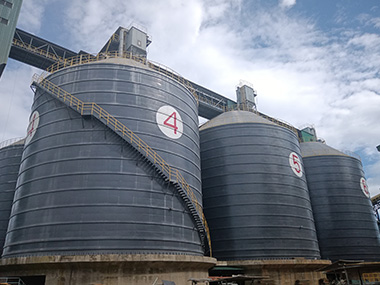

Pressure Relief Valve Sizing for Pneumatic Conveying Silos: A Field Engineer's Guide
Pressure relief valves on pneumatically fed silos must be sized to handle the maximum air volume entering during conveying — not just the material volume. Get this wrong and you're looking at a ruptured roof panel or a blown filter housing. The correct relief area depends on your conveying rate, air-to-material ratio, silo volume, and whether your dust collector can keep up. Here's how to calculate it properly, and the mistakes I've watched plants make.
Why Pneumatic Conveying Creates Overpressure Risks
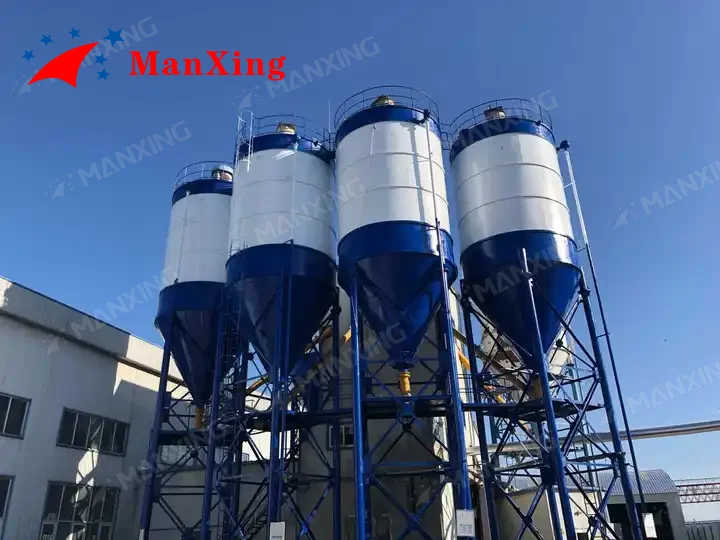
The Air Volume Problem Nobody Calculates
When you pump 80 tonnes per hour of cement into a silo, you're not just moving cement. You're moving roughly 2,500 to 4,000 Nm³/h of air along with it — depending on your conveying pressure and pipeline diameter. That air has to go somewhere. If the silo's venting capacity can't match the incoming air volume, pressure builds. Fast.
I've seen a 2,000-tonne clinker silo in Vietnam where the relief panels were sized for a dust explosion scenario but not for routine conveying. The baghouse was rated for 3,200 Nm³/h. The blower was pushing 4,800 Nm³/h. Every filling cycle, the silo pressure crept up to 12-15 mbar above the relief setting. The panels held — barely — but the filter housing distorted by 8 mm at the flange. Took them three shutdowns to figure out why the dust collector kept failing.
The math is straightforward. Your relief valve or vent area must handle the total air volume entering the silo during conveying, plus any additional volume from material displacement. Not just the dust explosion scenario. Both.
How Fast Pressure Builds in a Sealed Silo
A 500 m³ silo receiving 6,000 Nm³/h of conveying air with no venting will hit 20 mbar overpressure in about 90 seconds. At 50 mbar, you're in structural danger territory for most bolted silo designs. At 100 mbar, roof panels start buckling.
The rate depends on silo volume, obviously. A 3,000 m³ silo gives you more buffer — maybe 8-10 minutes before you hit critical pressure. But if your conveying rate is high and your relief area is undersized, you're just delaying the inevitable. I watched a plant in Indonesia try to "manage" this by throttling their blower. They ended up with pipeline blockages twice a week. The real fix was a bigger relief valve. Took us two days to retrofit.
The Sizing Methodology That Actually Works
EN 14491 and the Venting Equation
EN 14491 is the standard you want for dust explosion venting in silos. It gives you the deflagration venting equation:
A = (C × V) / (Pred × KSt)n
Where A is the vent area, V is the silo volume, Pred is the reduced explosion pressure, and KSt is the dust explosibility index. For cement, KSt typically runs 120-150 bar·m/s. For coal, it's 100-160. For fly ash, lower — around 80-110.
But here's the thing — that equation covers explosion venting. It doesn't cover the routine overpressure from pneumatic conveying. You need to size for both scenarios and take the larger area. Most engineers I've worked with only check one. Usually the explosion case. Then they wonder why the relief valve opens every time they fill the silo.
Accounting for Reduced Explosion Pressure (Pred)
Pred is the maximum pressure the silo structure can withstand during a deflagration. For a typical bolted steel silo with standard flange connections, you're looking at 100-200 mbar. Reinforced concrete silos can handle more — 300-500 mbar. But you need to verify this with your structural engineer. Don't assume.
I remember a project in Malaysia where the client's previous contractor had assumed Pred of 500 mbar for a 15-year-old concrete silo. We tested it. The actual safe limit was closer to 200 mbar — carbonation had reduced the concrete cover, and the rebar was corroded in three spots. They'd been running with undersized relief panels for years. Lucky nothing ignited.
When Deflagration Vents Aren't Enough
If your silo is indoors, or connected to a dust collection system, or located within 10 m of another structure, deflagration vents alone won't cut it. You need either explosion suppression (ISO 21873 compliant) or flameless vent devices. Suppression systems cost $15,000-$40,000 per silo depending on size. Flameless vents run $8,000-$20,000. Both require annual recertification.
For outdoor silos with good vent-to-atmosphere paths, a properly sized rupture panel is usually the most cost-effective solution. Panels run $500-$2,500 depending on size and material. Stainless steel for corrosive environments adds 30-40% to the price.
Common Sizing Mistakes I've Seen in the Field
Undersized Relief Areas
The most common mistake? Using the silo's existing vent filter as the sole relief path. A typical baghouse rated for 4,000 Nm³/h can't handle 6,000 Nm³/h of incoming conveying air. The filter media creates backpressure — usually 5-15 mbar when clean, 20-40 mbar when loaded. That resistance eats into your effective relief capacity.
Rule of thumb: your dedicated relief valve or rupture panel should handle at least 120% of the maximum conveying air volume. The vent filter handles the rest during normal operation. If the relief device opens, it's an emergency — you want margin.
Ignoring the Conveying Air Component
Some engineers size relief valves based on material volume alone. That's wrong. A dense-phase system moving 50 t/h of cement might only use 1,500 Nm³/h of air. A dilute-phase system moving the same 50 t/h could use 5,000 Nm³/h. Same material, same rate, four times the air volume. Your relief sizing has to match the conveying system, not just the silo.
I've got a spreadsheet I've been refining for 12 years. It takes conveying pressure, pipeline diameter, material density, and air-to-material ratio as inputs. Outputs the required relief area for both routine overpressure and explosion scenarios. I've used it on projects in 30+ countries. It's not fancy — just Excel — but it's saved me from undersizing more than once.
Vent Placement Errors
Relief devices need to be on the roof, positioned to vent upward and away from personnel areas. Sounds obvious. I've seen them placed on the side of the silo, 2 m above a walkway. If that panel blows, it's a 1.5 m² piece of metal traveling at 30 m/s across your maintenance path.
Also — don't put the relief valve directly above the material inlet. The incoming stream can block the vent opening during filling. Offset it by at least 1.5 m from the inlet point. On large silos, use two smaller vents on opposite sides of the roof instead of one big one. Better pressure distribution, and if one gets blocked, you've still got the other.
Integration with Dust Collection and Filtration
Baghouse Interaction with Relief Valves
Your baghouse and your relief valve are part of the same pressure management system. If the baghouse fan fails during conveying, the relief valve becomes your only protection. Size it accordingly.
We specify a differential pressure switch across the baghouse — set to alarm at 1,200 Pa and trip the conveying system at 1,800 Pa. That gives operators 10-15 minutes to respond before the relief valve needs to take over. In practice, most plants I've visited don't maintain these switches. They corrode, get bypassed, or the setpoints drift. Check them quarterly. It's a 30-minute job.
The Filter Clogging Scenario
Here's a scenario that catches people off guard. You're conveying into a silo. The baghouse filters are at 70% of their service life — differential pressure is already 800 Pa above clean. The conveying blower pushes air in faster than the filters can pass it. Pressure builds. The relief valve opens at 25 mbar. But the filters are so clogged that even with the relief valve open, pressure keeps rising because the relief path is partially blocked by dust accumulation on the valve seat.
This happened at a slag plant in Turkey. The relief valve had been installed 18 months earlier and never tested. Dust had caked around the spring mechanism. It opened 5 mbar late and stuck at 60% of its rated area. The silo roof buckled. Repair cost: $45,000. A quarterly test would have caught it.
Testing, Maintenance, and Real-World Performance
Inspection Intervals That Make Sense
Quarterly testing for relief valves. Annual replacement of rupture panels — even if they haven't blown. The metal fatigues over time, especially in humid or corrosive environments. A panel rated for 100 mbar when new might not hold 80 mbar after three years of thermal cycling.
For spring-loaded relief valves, annual recalibration. The spring constant changes with temperature cycles and corrosion. I've seen valves set to open at 25 mbar that were actually opening at 38 mbar. That's a 50% error. In a dust explosion scenario, that difference determines whether the silo survives or comes apart.
What to Look For During a Site Walk
When I visit a plant, I check three things on every relief valve. First — is the discharge path clear? Bird nests, accumulated dust, and stored materials block vent openings more often than you'd think. Second — is the valve moving freely? I tap the stem with a wrench. If it doesn't move, it's stuck. Third — is the setpoint documented and current? If the tag says 25 mbar but the last test was 14 months ago, I don't trust it.
Case Study: Cement Silo Relief Retrofit — Shandong, China
A 5,000-tonne cement silo at a grinding station was experiencing routine overpressure events during pneumatic filling. The existing relief system consisted of a single 0.8 m² rupture panel rated for dust explosion venting only. The conveying system delivered 70 t/h of cement at 5,200 Nm³/h of air volume.
We calculated the required relief area for routine overpressure at 1.4 m² — nearly double the existing panel. The explosion venting calculation per EN 14491 required 1.1 m². We installed two 0.75 m² flameless vent devices on opposite sides of the roof, offset 2 m from the material inlet. Total cost: $18,500 including installation.
After commissioning, we monitored silo pressure during 47 filling cycles. Peak pressure never exceeded 12 mbar. The previous system had been hitting 35-40 mbar regularly. The plant manager told me they'd been living with the overpressure for three years because "it hadn't failed yet." It would have. The roof bolts were already showing fatigue cracking at the flange connections.
Frequently Asked Questions
Q: Can I use the silo's vent filter as the only relief device?
A: No. Vent filters are designed for normal operation, not emergency relief. They can't handle the full conveying air volume, and they fail closed when clogged. You need a dedicated relief valve or rupture panel sized for the maximum overpressure scenario. The vent filter handles day-to-day air displacement. The relief device handles emergencies.
Q: What's the difference between a rupture panel and a spring-loaded relief valve?
A: Rupture panels are single-use — they blow at a set pressure and must be replaced. They're cheaper ($500-$2,500) and have no moving parts to stick. Spring-loaded valves reclose after opening and can be tested in place. They cost more ($2,000-$8,000) but don't require a shutdown to reset. For most cement and clinker applications, I prefer rupture panels — simpler, more reliable, and the replacement cost is trivial compared to a silo repair.
Q: How do I know if my existing relief valve is undersized?
A: Check the pressure during filling. If your silo regularly exceeds 15-20 mbar above atmospheric during conveying, your relief capacity is insufficient. Install a pressure gauge with a peak-hold function on the roof. Run five filling cycles. If the peak pressure is more than 60% of your relief valve's setpoint, you need a bigger valve. Also compare your conveying air volume to the relief valve's rated capacity — if the air volume exceeds 80% of the valve rating, that's your answer.
Need Help Sizing Relief Systems for Your Silo Project?
Manxing has designed and commissioned silo systems across 30+ countries — from 500-tonne fly ash silos to 30,000-tonne clinker storage. Our engineering team handles pressure relief sizing, explosion protection design, and full EPC delivery. We don't guess. We calculate, test, and verify.
Get in touch: manxingstorage.com — or email your conveying parameters and silo dimensions to our engineering team for a free relief sizing review.
We've been doing this since 2009. We've seen what works and what doesn't. Let us make sure your relief system is right the first time.